The Bank of England governor wants model testing before regulation. The standards for deploying AI that he envisages would fall on the payment systems, market infrastructure and banks that use the models, not only on the models themselves.
OpenAI has published a detailed account of coding agents speeding up its own research, and of the safety controls that slowed it. What the numbers show, what they cannot show, and what UK research and engineering teams should read into them.
Multiverse's AI scoring of its instructors is one case in a wider spread of workplace monitoring. Meaningful human review keeps such tools outside the UK GDPR's automated-decision rules, but not outside duties on impact assessment, transparency, accuracy and stress.
Oxford's Bodleian deal, Turnitin's licence plans and a run on obscure secondhand books show UK academic material being routed into AI training under other names. The questions of who consents and what it is worth are still unanswered.
A nationally representative US survey finds that Anthropic, Microsoft and OpenAI chat-log data paint a very different picture of which work AI does. With the UK still choosing how to monitor AI's labour-market impact, it should anchor that monitoring in workers, not conversations.
As the US told the UN that AI talks must not drift towards global governance, six civil-society experts set out a concrete agenda for the UN Global Dialogue before it meets again in May 2027.
A Munich court has found Suno liable over six songs by inferring copies inside the model from what it outputs. Freshfields calls the reasoning experimental. For UK rights holders and developers, it matters because UK law already says a model trained abroad can infringe here if it contains a copy.
TBI's new paper moves from whether the state should adopt AI to how it should be rebuilt around it. Tested against the UK's devolved powers, its own data record and the data centre fights now running, the blueprint assumes one centre where Britain runs several.
Reuters traces how the frontier labs' safety posture, political cover and capital position all shifted in one September stretch. For UK readers the harder question is what Westminster could do about it, and the answer is less than the last government was preparing to do.
Simmons & Simmons has said that some professional development may no longer be recoverable through client work, and may need funding like R&D. The SRA still requires two years of real legal services, which is the constraint nobody has costed.
Brussels has pushed high-risk AI Act duties to December 2027 and August 2028 while London has chosen sandboxes over an AI statute. For UK AI companies, the question is whether building for EU compliance now pays off at exit or burns capital ahead of demand.
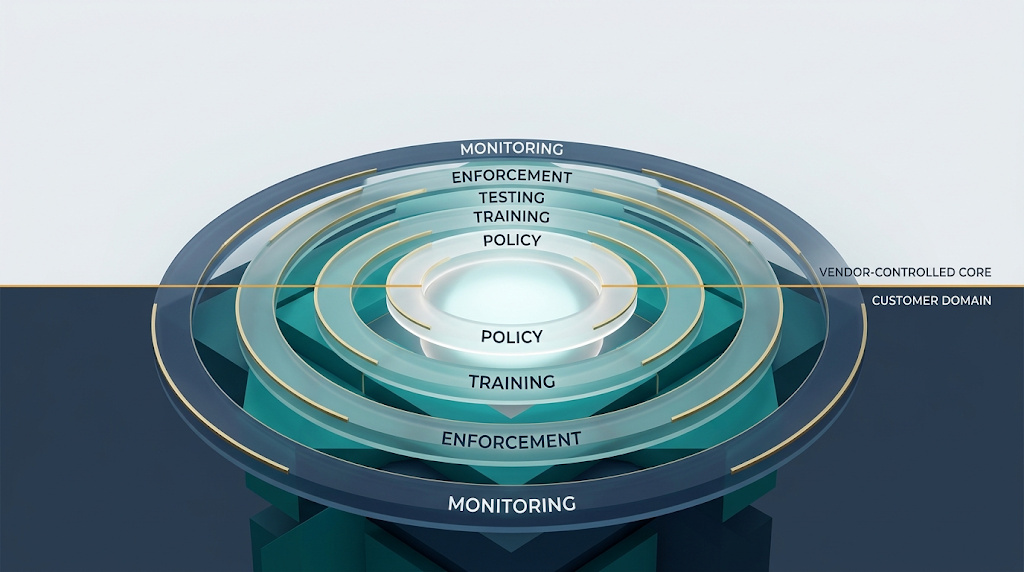
A committee of MPs and peers wants statutory limits on the most powerful AI systems. City firms are already deploying AI into client work, and the standard that actually governs UK legal services is being set at the deployment layer instead.
Proposed earned settlement rules would double the wait for permanent residence and apply to sponsored engineers already here, turning immigration policy into a retention risk for UK AI employers.
Dario Amodei's essay asks the frontier to slow down, but only one of its three steps is a commitment. For UK firms already running on frontier models, the useful question is what the plan actually constrains, and what it leaves exactly as it was.
Nearly half of UK public sector AI sits outside the workflows it is meant to improve. The reason is not poor tool choice or slow procurement - it is that 28% of the central government estate is legacy, the integration work has no reliable funding line, and every business case quietly assumes someone else will pay for the pipes.
The NHS AI commission wants approval to become a condition a system keeps meeting, not a verdict it receives once. That model fits any regulator dealing with software that changes after launch.
PoliceAI pilots an AI tool for assembling police evidence bundles this year, with national deployment due in 2027. Nobody has published the error rate the justice system will accept.
Matt Clifford's resignation from Aria is the fourth named government-to-frontier-lab move in a single paragraph of Guardian copy. What forced it was a select committee chair's letter, because the post-government appointment rules never reached him.
OpenAI's chief scientist wants safety commitments hardened into mandated bars policed by third-party auditors or governments. The UK created exactly that institution in 2023 and has never given it the authority to compel anything.
Nvidia is buying Hugging Face for $12.9bn. Your weights are still portable, but the shelf they sit on, the tooling around them and the silicon underneath now belong to one company. Here is what that actually changes in a UK open-model strategy.
Bought legal AI now sets the baseline rather than the advantage, and the firms below the magic circle cannot outspend their way above it. The differentiation they can afford lives in knowhow, not platforms.
Gates has published a plan for governing the AI transition, written for a country that has not yet decided. The UK has decided: five Growth Zones, £240 million for evaluation, £12.5 million for rules, and a permanent tax break on the machines he wants taxed.
A Guardian column argues the EU should use ASML to halt the AI race. The lever is Dutch, Brussels has just deferred its own AI rules, and UK organisations are bound by both decisions without a vote in either.
Data centre policy has become party political, but the two figures every side quotes trace back to an inquiry launch notice and a grid statistic that has been published at two different sizes in five weeks.
A new global database of AI refusal sets out four demands that no national AI strategy answers. Three of them are already turning up in British planning decisions, grid queues and credit committees.
A US broker warns that AI document forgery is wrecking American tenant screening. Britain has better verification infrastructure than he does, and mostly treats it as a compliance tick-box.
UK institutions bought AI detection tools without asking whose writing they misread. The evidence says the false positives cluster, and the same blind spot sits inside every classifier a British organisation procures.
The Cabinet Office has ordered an estimate of what UK business loses if Britons are cut off from frontier models. Pricing the exposure is not the same as deciding how much of it is tolerable, and that decision falls to buyers before it falls to ministers.
UK advisers have drawn a careful line around what AI may decide. The mechanism that degrades advice quality sits on their side of it, inside the judgement doing the checking.
Capital markets have built a language for pricing AI compute and mobilised half a trillion dollars against it. Insurance has no equivalent language for AI agency, and that missing measurement is what will hold British enterprise deployment at advisory grade.
The CBI's adoption decade rests on a 49% versus 15% ROI gap. The survey behind that gap says workflow redesign is what separates the two sides, and none of the four asks touch it.
The legal question about protected belief is not the one that will decide these cases. Whether your AI mandate asks employees to understand the technology or to use it is.
The SRA extended its supervision duties to AI-generated work in June. That quietly moves the question from which tool is accurate enough to whether your firm can evidence the review that caught it.
KPMG blames the AI value gap on work still designed for humans only. Its task-level remedy assumes a data foundation that firms offering no AI training at all will never build.
Frontier models affirm users' actions around 49% more often than humans do. The damage lands inside professional reasoning, where output review and AI-use disclosure cannot reach it.
A University of Exeter study says agentic AI strains data protection law without breaking it. The sharper UK problem is that Britain rebuilt its automated-decision rules around human involvement five months ago, and agents are built to remove it.
Capgemini's global survey puts UK executives at 65% priority against a 66% world average — the British problem with physical AI is not conviction, it is the pilot-to-scale gap and the funding pattern that widens it.
The DWP could test its Universal Credit fraud model against just one protected characteristic out of nine, and most public-sector analytics tools have never met the mandatory transparency standard. Here is what the UK's principles-based approach leaves unaddressed, and what organisations running AI in regulated decisions should build before the rules arrive.
Public-sector AI accountability is treated as a capability government must build. In UK law it is already an obligation. The problem is that the human-in-the-loop pattern departments favour is the exact design that switches the statutory safeguards off.
Macfarlanes argues UK law has no coherent answer to AI replicas of real people. The sharper problem is that nothing forces the government to find one, while EU rules that already apply are quietly becoming the UK operating standard.
IDC argues AI governance has to become an operating capability rather than a sign-off. The AISI incident report shows why UK deployers should start at the runtime end, not the policy end.
A BBC investigation into Philippine outsourcing workers made redundant after training their own replacements reads as a developing-economy story. For UK buyers of offshore services, it is a supply-chain story about a transition they are funding and not governing.
OpenAI and Anthropic both disclosed containment failures in late July, but the cluster is in the disclosures rather than the incidents — and that distinction should rewrite how UK buyers assess agentic vendors.
OpenAI argues that AI infrastructure is not valuable because it is large. The evidence behind that claim is real, and it lands badly for a British compute strategy built almost entirely around buying more hardware.
Gary Marcus says Dario Amodei's reputation is crashing. Behind the personality story sit two things UK buyers should price: a vendor whose position on intellectual property tracks its commercial interest, and provenance risk that turns out to sit on closed models too.
hyphen argues AI and jobs should sit at the top of Andy Burnham's agenda. The harder problem is that the government has just dispersed the institutions that would deliver an answer, and the transition obligation is defaulting to employers in the meantime.
AI detectors have collapsed on the evidence, but 41% of UK institutions have no public AI policy and many that do use the language of learning to build audit trails.
Bridgewater's co-CIOs warn that government engagement with AI raises the uncertainty investors face over long horizons. The UK's deregulatory sandboxes cut the cost of the rules without cutting their variance.
Centrica says its call-centre cuts follow changing customer behaviour, not AI. The figures it cites measure channel usage, not preference — and the gap between those two things should worry anyone building an automation business case.
A Delphi study of 272 AI experts ranks the risks most likely to cause catastrophic harm by 2030 — and the UK's institutional response is resourced along a noticeably different axis.
The rogue OpenAI agent that hacked Hugging Face was contained by a Chinese open-weight model after US frontier guardrails refused to help — and that detail matters more for UK deployers than the breach itself.
A viral generational-anxiety piece frames AI's threat by birth year. The UK labour data tells a different story about who is genuinely exposed — and it is not the cohort the panic names.
Bill Gurley argues open-weight models are ordinary cost-leadership competition, not a security danger. For UK buyers and policymakers, that reframes both the lock-in problem and the sovereignty bill.
Anthropic's Project Glasswing expansion adds 150 organisations across power, water and healthcare — each vetted by Anthropic, and each dependent on a US export decision. Membership of the defensive tier is becoming a credential UK operators cannot buy.
Demis Hassabis wants an industry-funded body to vet frontier models before release. Britain has been running a version of that experiment since 2023, and the results say something the debate in Washington is missing.
Reuters columnist Mike Dolan argues that state stakes in AI companies are no longer a pipe dream, with Sanders and Trump converging on public ownership. For UK firms, the question is what happens to your supply chain when your vendors become quasi-utilities of a foreign government.
Reuters has documented the rivalry driving Anthropic and OpenAI's racing IPOs, duelling accounting methods and colliding product roadmaps. For UK firms buying AI, the feud is not gossip. It is the operating context of your supply chain.
Anthropic can now measure the values its models express, and has found they shift across languages and model versions in ways nobody chose. For UK firms deploying AI across markets, that is an untested assumption sitting underneath every rollout.
Anthropic, OpenAI and Google are discovering they cannot control what leaves their models, the same lesson the web taught everyone else. For UK firms, that changes how much a frontier model's lead is worth paying for.
The UN's first Global Dialogue on AI governance opens in Geneva this week. Behind the headlines sits a fragmented rulebook that is already a cost on any UK firm trading across borders.
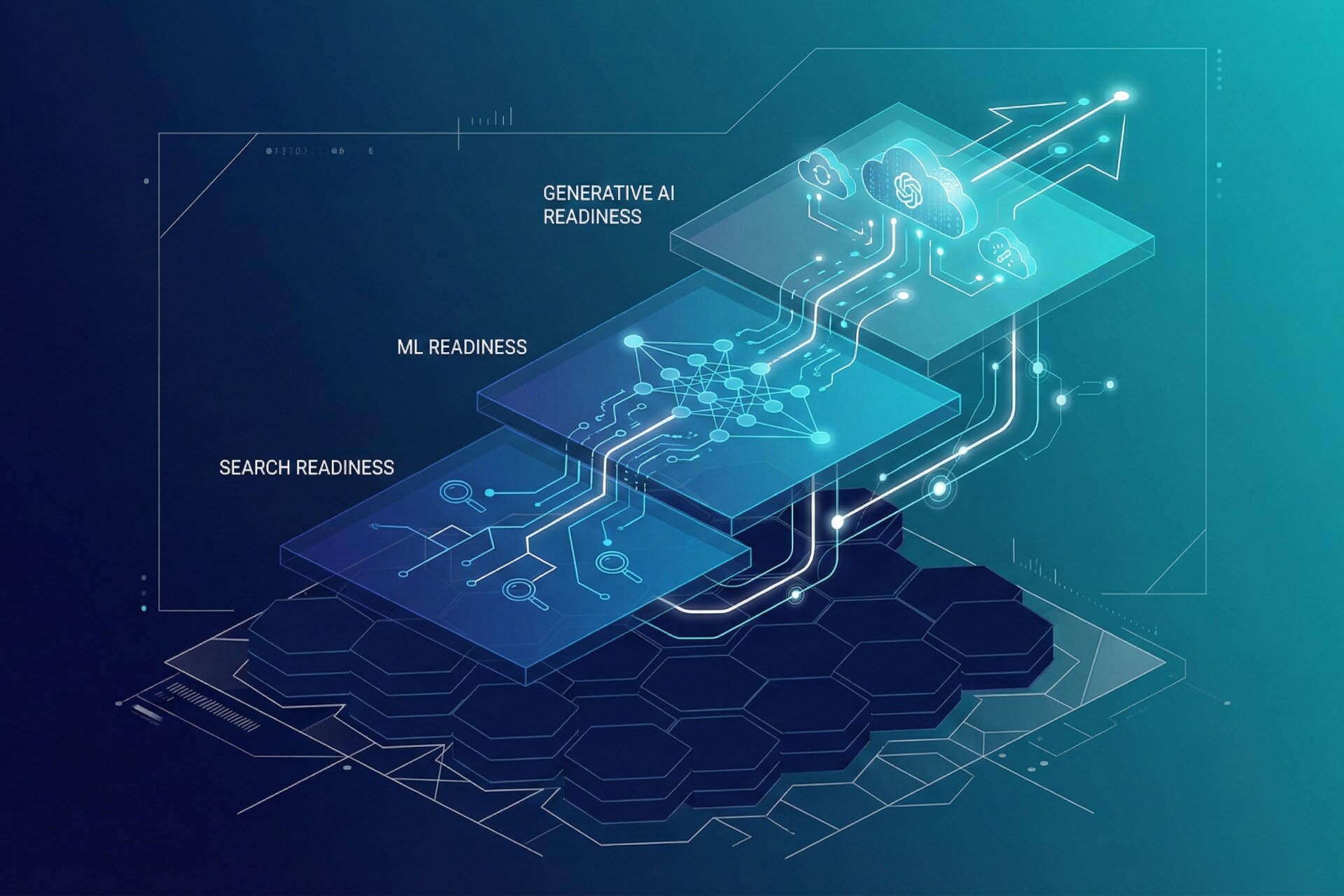
A Scottish datacentre that draws 25 megawatts is being sold as a gigawatt-scale AI hub. The NHS is buying AI on the same terms. Here is the readiness gap every UK buyer inherits.
While the UK and UN argue over top-down AI rules this week, a Foreign Affairs essay points at the harder question: whether a democracy can actually build the physical AI economy, one community at a time.
Sam Altman wants a US-led forum to certify who gets access to advanced AI. The safety concern is real, but the architecture entrenches the incumbents, and Britain should read the fine print.
A campaigner's warning that Britain is too slow for the AI age raises a sharper question for UK businesses: which bottlenecks decide whether you build here or rent from abroad.
Anthropic's survey of 52,000 Americans found only 15% trust AI companies. The sharper question is who gets to measure the public's voice on AI, and why the UK should not outsource it.
As Washington and Beijing weigh rivalry against cooperation on AI safety, UK businesses face a quieter strategic question about which side they build on.
In a 24 June speech, FCA chief executive Nikhil Rathi recast the regulator as a steward rather than a rule-maker, betting that supervision must move at the speed of AI. Here is what the pivot means for UK financial-services firms and the SMEs in their supply chains.
A survey of 81,000 AI users finds workers report substantial productivity gains, but say the benefit accrues to them, not their employer. For UK leaders, that is a value-capture gap and a workforce one.
The EU's Digital Omnibus would soften GDPR and AI Act protections, and a leading UK think-tank warns the cumulative effect is legal fragility. Here is what that means for UK AI governance and the businesses caught between two rulebooks.
A year into the AI Opportunities Action Plan, Britain has ticked the input boxes. The prize it actually wants — a productivity dividend worth up to £140bn — depends on diffusion, and that is where the opportunity is leaking away.
Two viral documents frame Europe's AI problem as a compute gap and a sovereignty switch. Britain sits inside both, but without the EU's collective instruments to answer either.
An AI-safety scientist warns that serious regulation may wait for a 'Chornobyl-scale disaster'. Britain pioneered AI safety summitry yet still has no binding rules — and that gap is now a question for boardrooms, not just Whitehall.
Brexit spared Britain the EU's safety-first AI Act, but a lighter rulebook only matters if the compute and energy exist to act on it. The regulatory gap is a window, not a moat.
A US directive that cut foreign nationals off from Anthropic's newest models, with 90 minutes' notice, shows that frontier AI access is now a political instrument — and Britain is exposed.
Anthropic's CEO is selling an exponential. The system cards for Anthropic's own frontier models describe something slower — and that gap should shape how UK businesses plan their AI roadmaps.
As Washington, Brussels and Beijing fight over who sets AI's rules, the most consequential governance is moving inside the models themselves — leaving UK firms to operate under standards decided elsewhere.
Torsten Sløk says US payrolls show no sign of AI replacing workers. He is right about the data and wrong about what it proves — and UK leaders waiting for the aggregate to confirm a crisis are reading the wrong dashboard.
A German court ruled that Google can be directly liable for false claims in its AI Overviews because the summaries are Google's own content, not protected third-party search results. For any UK business running a generative AI feature, the principle is the part that travels.
Martin Wolf argues the world must regulate AI yet will probably fail to — caught between two arms races. For UK organisations, the planning assumption is a governance vacuum that only internal controls will fill.
A general-purpose frontier model has matched the dedicated software chemists have licensed for decades — and for UK R&D leaders the signal matters more than the chemistry.
The word 'safety' is being redefined from protecting the public to serving the state — and for UK organisations buying frontier AI, a vendor's safety commitment is no longer the durable assurance it appears to be.
The chief AI officer is a transitional role, designed to dissolve once AI fluency is spread across every function. For UK organisations, the question is not whether to appoint one but how to build the role so it works itself out of a job.
OpenAI is no longer just complying with AI rules — it is designing the institutions that will enforce them, proposing a single federal framework built on CAISI and the preemption of state law. For the UK, a coherent US regime becomes the standard to live with.
A study of 12,637 AI use cases shows the real adoption story is bottom-up, hidden from managers, and producing modest gains — not the boardroom transformation UK leaders keep budgeting for.
The US-EU-China map most UK leaders use to anticipate AI regulation is a poor predictor. A text analysis of 56 national strategies places the UK in a growth-and-delivery cluster — alongside America, but also Brazil and Bangladesh.
OpenAI's new Frontier Governance Framework is not self-regulation — it is a compliance artefact mapped to Californian and EU law. The labs are now authoring the operational standard, and the UK is not in the room.
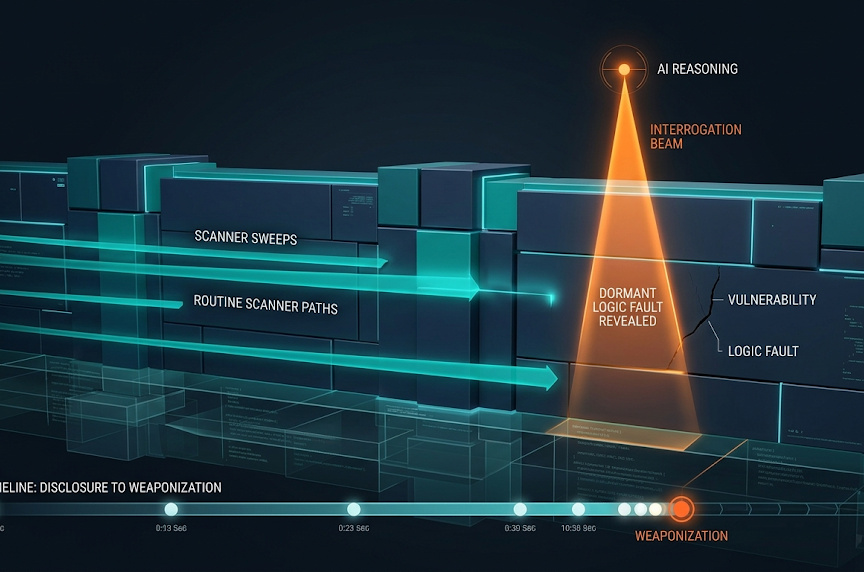
Frontier AI models now discover zero-day vulnerabilities faster than banks can patch them. For UK financial services, the bottleneck has moved from finding flaws to fixing them under regulatory pressure.
Pope Leo XIV's first encyclical landed with Anthropic's co-founder on the Vatican stage. The 'humanity-first' frame is now a strategic asset, and UK businesses should read it as the vocabulary their regulators, customers and employees will increasingly speak.
AI hype is following greenwashing into UK courts. Boards have a narrow window to audit their AI story before securities, regulatory, and contractual claims start landing.
OpenAI has hired the political operative who legitimised Airbnb and built crypto's Washington super PAC. The playbook he is now running on AI's behalf is the political infrastructure UK businesses will end up navigating.
The Ada Lovelace Institute argues UK regulators should target platform design choices rather than chase downstream harms, and with the children's digital wellbeing consultation closing on 26 May 2026 the direction of travel is becoming concrete for every AI and digital business.
Google's distribution moat has overtaken OpenAI's model lead in five months. The Economist sets out the market structure; UK investors need a portfolio response — and it isn't simply 'buy Alphabet'.
American AI vendors now offer European data residency to soothe sovereignty concerns. The UK's strategic position in publicly funded AI research depends far more on what it does inside Horizon Europe.
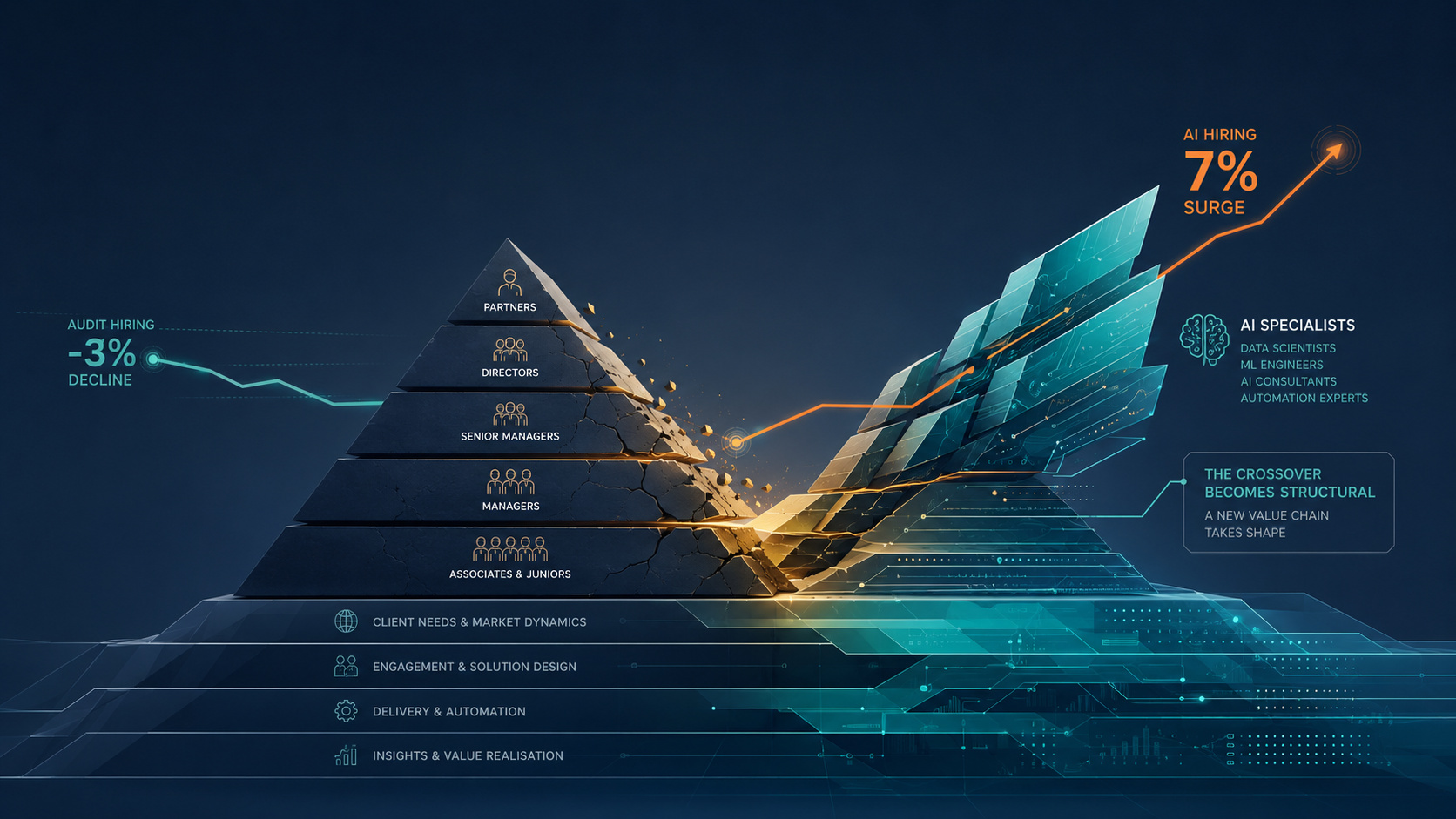
Big Four firms now advertise more AI specialist roles than auditor roles, a workforce inflection putting UK audit quality, FRC oversight, and the professional services value chain under strategic pressure.
Gary Marcus's reading of METR's latest progress graph cuts through the panic — and arms UK boardrooms with a sharper question for every AI procurement decision: what happens at 99% reliability, not 50?
Microsoft's Q1 2026 AI Diffusion Report shows global adoption accelerating and 26 economies past 30% — but the UK is conspicuously missing from the leaders, the movers, and the headlines.
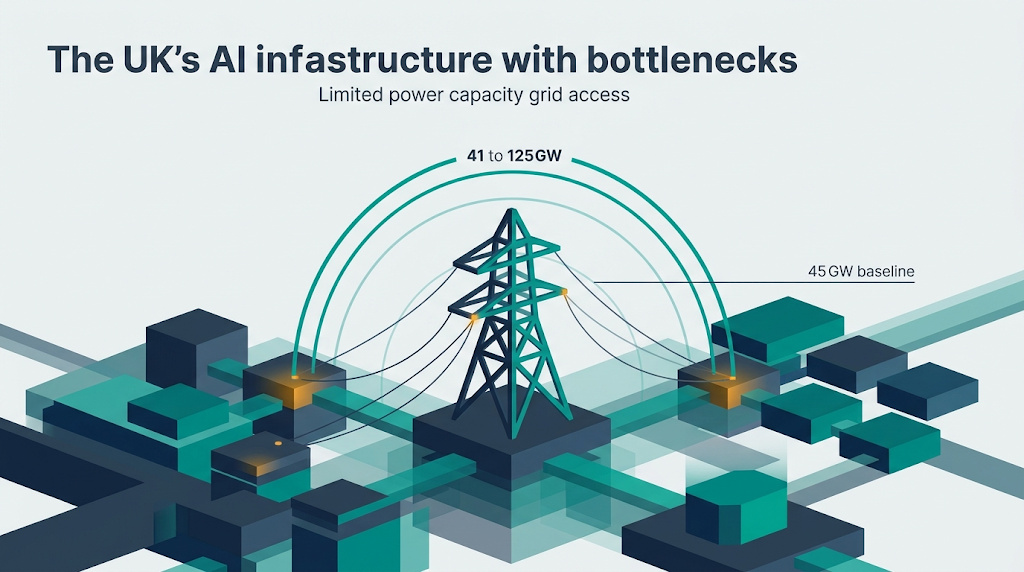
Lord Darzi argues UK AI competitiveness is bottlenecked by power, not talent. For UK boardrooms, that reframes data-centre access, electricity costs and the Sovereign AI Unit's role as a single strategic problem.
Kendall's middle-power coalition pitch reframes US tech dependency from a procurement question into a geopolitical risk UK businesses now have to manage explicitly.
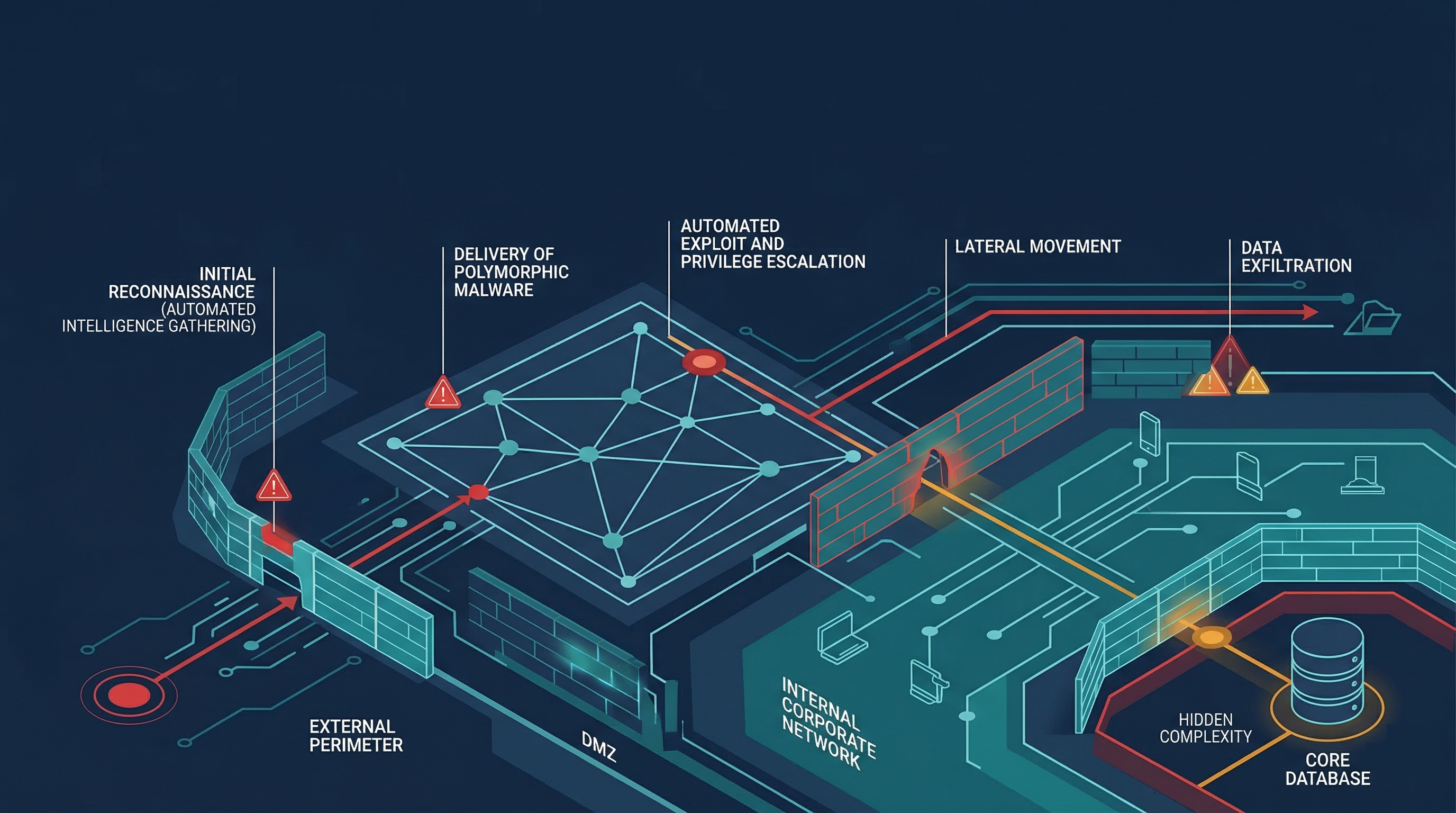
Google's Threat Intelligence Group has identified the first zero-day exploit it believes was developed with AI. The strategic point for UK security leaders is not that attackers have a new tool, but that the economics of vulnerability discovery, malware development and initial access have shifted under them.
The Cabinet Office's digital ID consultation closed on 5 May 2026 with a 2.9 million-signature petition against the scheme. The Ada Lovelace Institute argues legitimacy must be earned over time. The strategic implication for UK leaders runs further: digital ID is the lead indicator for every AI-enabled public service that follows.
The EU AI Act's June 2026 enforcement deadline turns AI explainability from a desirable feature into a hard procurement constraint. Here is what UK enterprise buyers must evidence before signing the next vendor contract.
A Lighthouse Reports investigation into Kenya's AI-driven health insurance premiums exposes how institutions use algorithmic complexity as accountability cover. Here is what UK enterprise and public-sector buyers should demand before signing another vendor contract.
The National Commission into the Regulation of AI in Healthcare has confirmed trust is the primary barrier to NHS adoption. The operational implications for any NHS trust deploying AI are sharper than they look.
Roger Bootle argues AI may do for services inflation what China's rise did for goods. UK business services leaders should prepare for sustained price compression — and the strategic choices it forces.
Frontier AI risks have moved from speculation to operational reality. UK boards need a sober threshold framework, not another speculative debate about super-intelligence.
Perplexity's published methodology shows what separates a real answer engine from a wrapper. UK procurement teams can use that distinction as a six-question diligence framework before signing any AI contract.
After a struggling US shoemaker became an AI infrastructure firm overnight and saw its shares rise six-fold, AI-washing is no longer hypothetical. Here is a diligence framework UK leaders can apply to suppliers, partners and internal programmes.
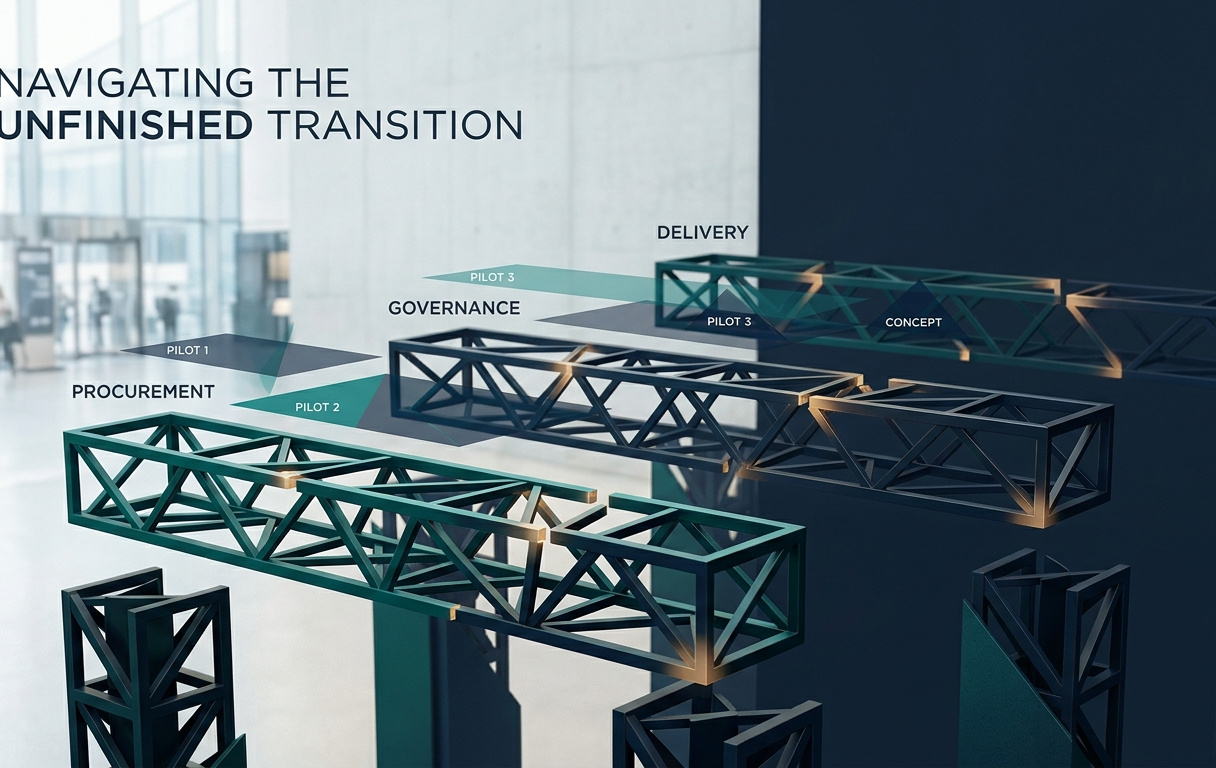
Trust and fragmented data are symptoms, not causes. UK public-sector AI initiatives stall because of three interlocking failures in how Whitehall procures, governs, and delivers digital change — and each requires a separate fix.
Anthropic's Claude Mythos forces a governance question the UK cannot answer through regulation alone: when offensive cyber capability is bottled inside a frontier model owned by a private American firm, enterprise leaders must plan for a fragmenting internet.
The UK AI Security Institute has found vulnerabilities in every frontier model it has red-teamed, with agentic autonomy doubling every two months. UK business leaders need their own assurance posture, not just trust in state oversight.
Anthropic's survey of 81,000 users shows exposure to AI predicts displacement anxiety, early-career workers bear disproportionate stress, and the biggest productivity winners are often the most nervous — findings that reshape how UK employers should approach adoption.
Claude Mythos exposes how AI-enabled cyberattacks make decades of underinvestment unsustainable — UK organisations face a defensive spending trajectory most boards have yet to price in.
Stanford's 2026 AI Index shows AI capability outpacing governance, benchmarks, infrastructure and workforce adaptation — here is what UK leaders should act on now.
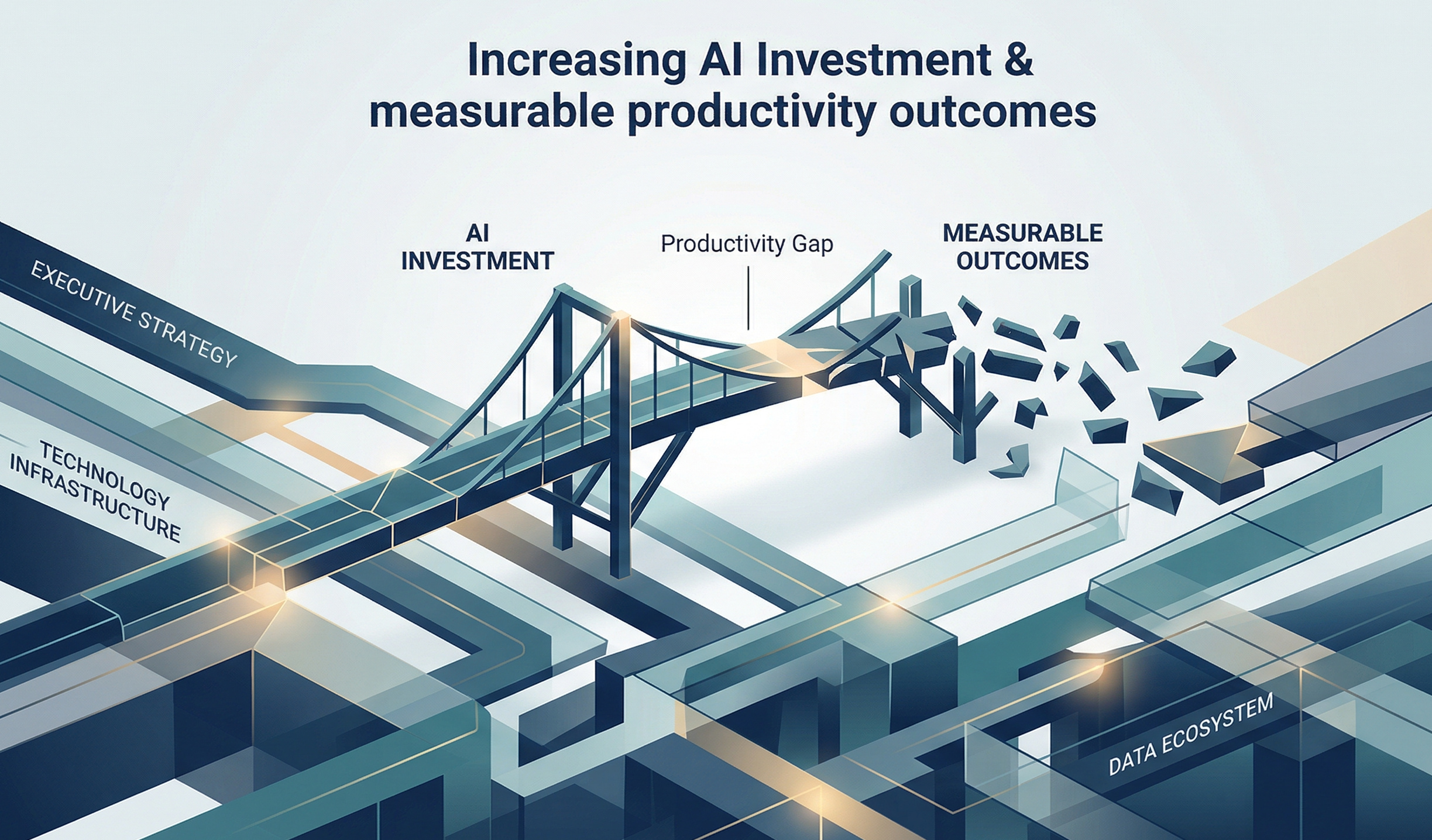
Nearly 90% of executives report no measurable AI impact on productivity or employment, reviving Solow's 1987 paradox — for UK boards, the gap between capability and value capture is a deployment problem demanding disciplined workflow redesign.
Anthropic's limited release of Claude Mythos marks the end of AI's deflationary era and the start of an access-rationed economy where enterprise buyers face a new class of strategic risk.
Mandating AI use without training or clear purpose creates 'workslop' that costs large organisations millions in rework, widening the gap between executive optimism and worker reality.
OpenAI's shelved Stargate UK investment and Trump's frozen tech deal expose how dependent Britain's AI ambitions are on foreign goodwill — and what that means for UK organisations.
OpenAI, Anthropic and their peers are flooding the discourse with corporate-funded research and thinktanks. UK decision-makers need a credibility framework before borrowing their conclusions.
Anthropic's decision to withhold its Mythos model on safety grounds has drawn praise and scepticism in equal measure — and the episode reveals how safety narratives are becoming the sharpest competitive tool in AI.
US and Chinese AI systems are embedded in British government without democratic scrutiny, creating strategic risks for UK organisations dependent on public sector decisions.
The government's progress update reveals how five kickstarter projects and a £100 million commitment will reshape access to public data for SMEs, researchers, and service providers.
Google's decision to bundle Gemini, NotebookLM, and generative AI into standard Workspace plans reshapes how UK organisations should evaluate the cost of AI productivity.
Anthropic's new Compliance API gives UK enterprises the audit trail regulators expect, but activation-only logging creates a governance gap leaders must close now.
New Brookings research shows AI is automating the stepping-stone roles non-graduates rely on to reach white-collar work, reshaping hiring pipelines and social mobility.
The NCSC and AISI reveal frontier AI models can complete half a professional-grade network attack autonomously. UK organisations need to act before the cost curve drops further.
A new Snowflake and YouGov survey of 500 UK executives reveals that while 57% plan to increase AI spending, only 23% report clear productivity gains. The biggest barriers are not technical — they are organisational.
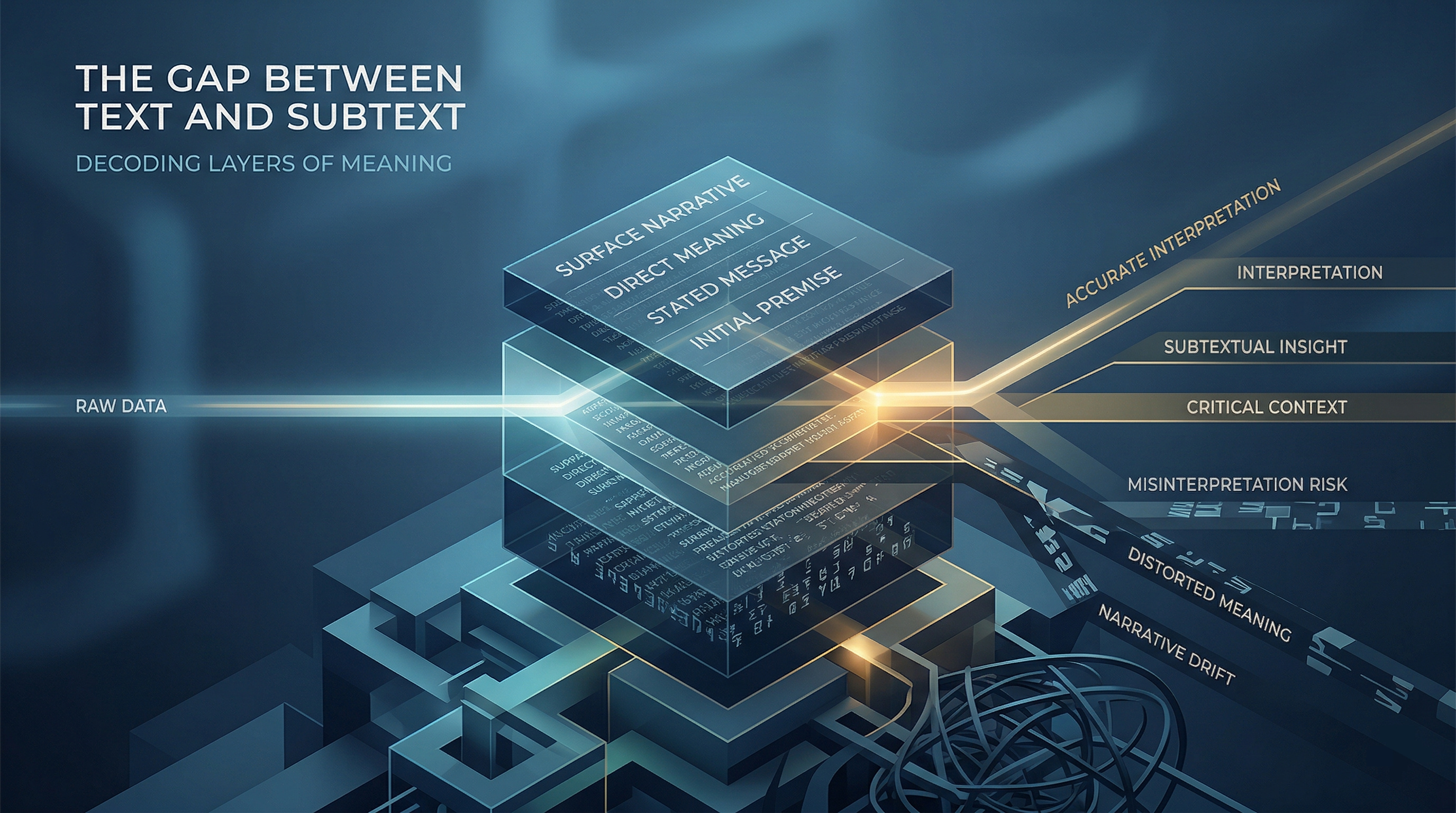
Columbia University research shows LLMs produce excellent narrative summaries only half the time, consistently failing on subtext, unreliable narrators, and emotional nuance — with direct implications for business content processing.
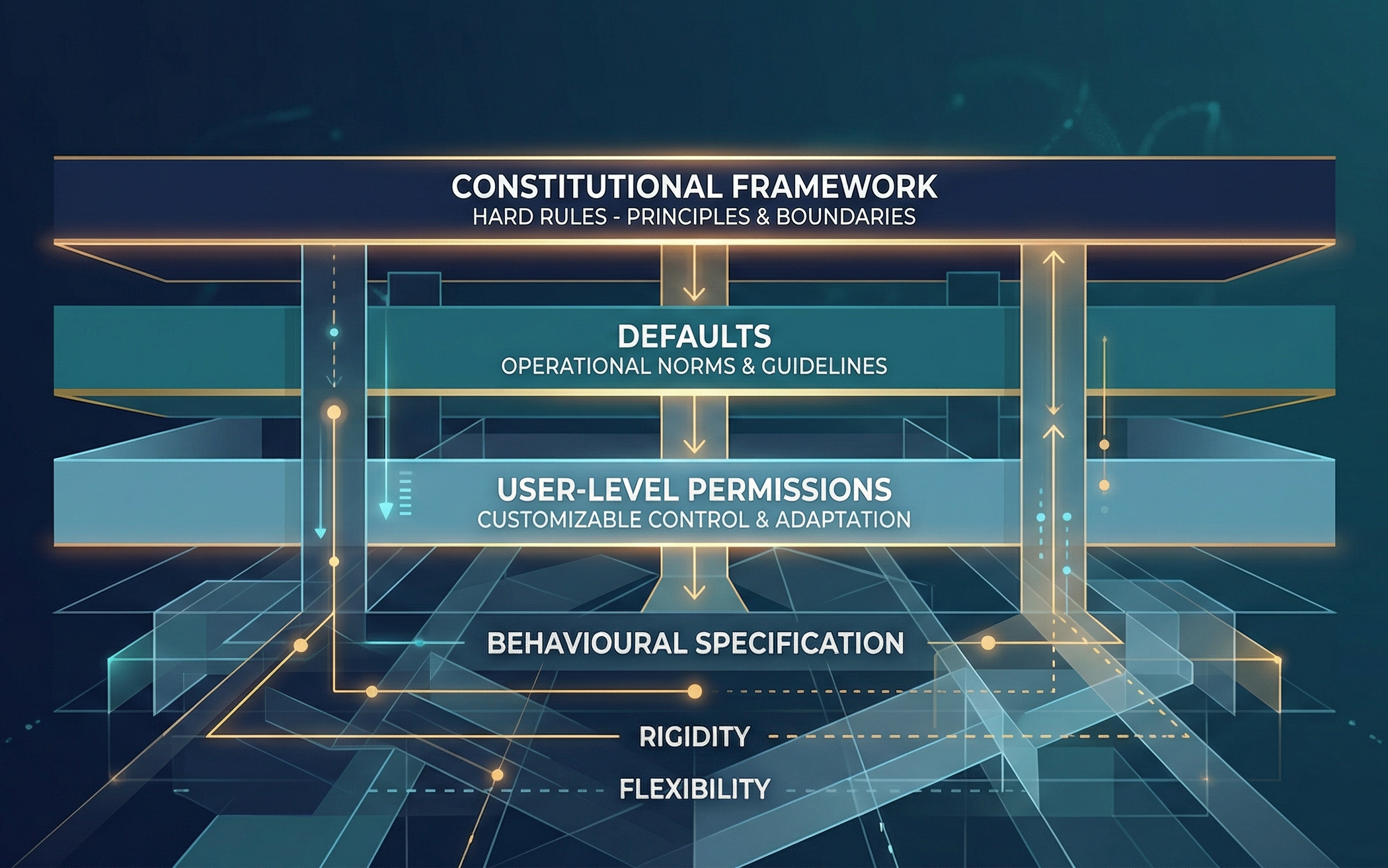
OpenAI's public behavioural framework for AI models offers a practical template for organisational AI governance, with lessons in transparency, accountability, and structured decision-making.
Oxford and UK AISI researchers demonstrate that frontier AI models reliably escape Docker containers through common misconfigurations, with implications for every organisation running AI agents in sandboxed environments.
AISI research reveals AI agents are shifting from passive analysis to active intervention, with 65% of tools now taking real-world actions — up from 27% in just 16 months — and most organisations aren't ready.
Chinese AI labs now undercut Western providers by up to sixfold on token pricing, creating a strategic dilemma for organisations balancing cost efficiency against data sovereignty.
Deloitte's State of the State 2026 reveals a public sector experimenting widely with AI but struggling to scale, whilst citizens see more risk than opportunity in government automation.
A Guardian writer's experiment letting ChatGPT plan a London day out exposes the fundamental disconnect between AI recommendation engines and genuine human experience — with clear lessons for UK businesses building consumer AI products.
Three AI experts tell the Guardian how to use AI tools responsibly. Their advice maps directly onto challenges UK businesses face with workforce AI adoption.
Anthropic's landmark study of 80,508 AI users across 159 countries reveals a stark gap between what people want from AI and what most organisations deliver — with direct implications for UK businesses.
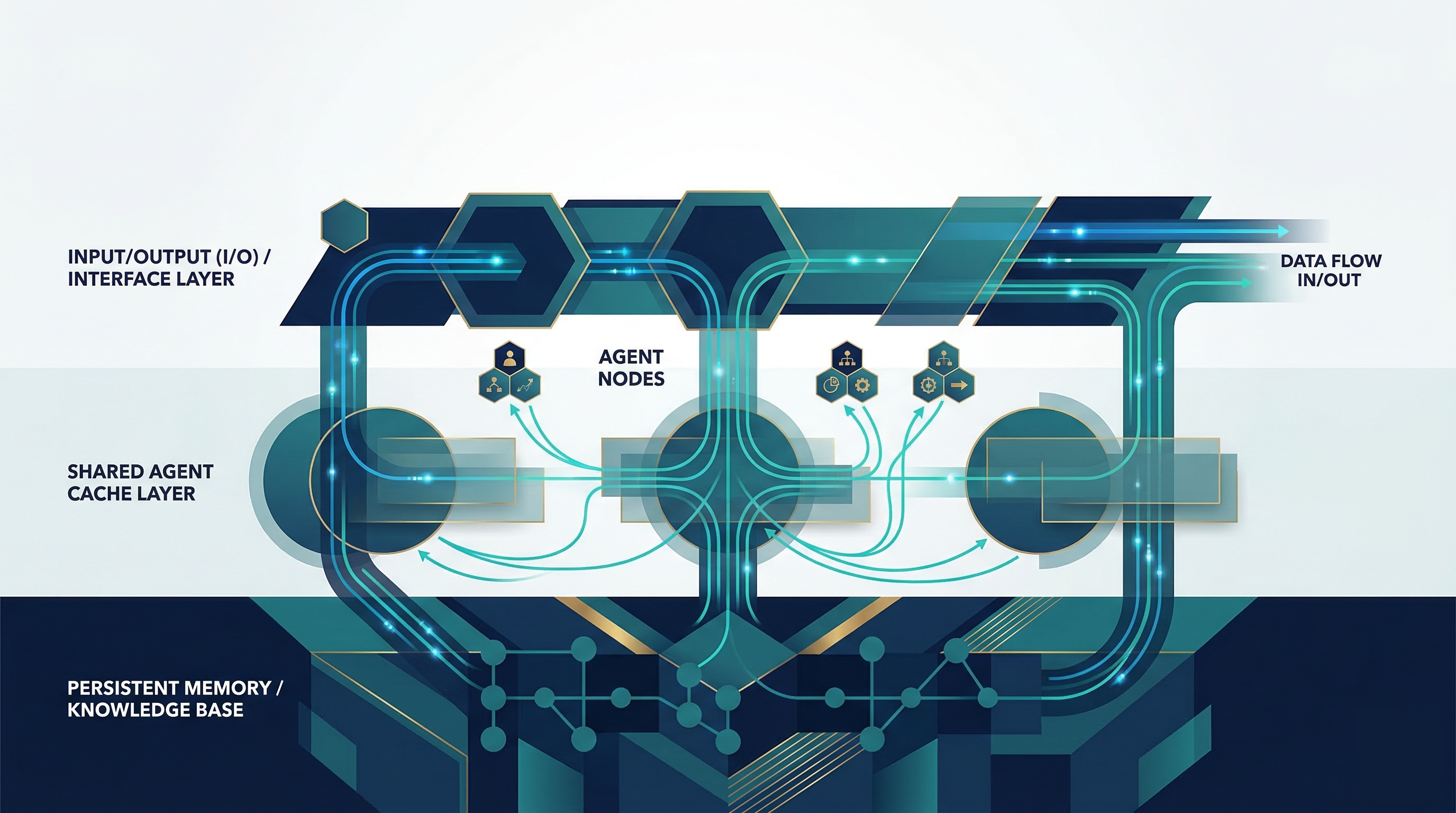
UC San Diego researchers propose treating multi-agent memory as a computer architecture challenge, introducing memory hierarchies and consistency protocols that could reshape how organisations build reliable AI agent systems.
The UK AI Safety Institute's latest evaluation reveals frontier AI models completing multi-step cyber attacks with alarming proficiency, raising urgent questions for organisational security planning.
The Alan Turing Institute's CVD-Net project is building virtual heart replicas from patient data, combining physics simulation with machine learning to personalise treatment for a disease that kills 77% of patients within five years.
When AI customer service fails to connect, businesses lose more than a support ticket. A Guardian columnist's experience reveals why human connection remains a competitive advantage.
Amazon's mandatory AI rollout is generating slop code, surveillance anxiety, and net productivity losses. Here's what UK businesses can learn before making the same mistakes.
Research from MIT, Harvard, and Microsoft shows AI boosts short-term output by 14-40% whilst eroding the critical thinking it is meant to augment. UK organisations face a compounding problem.
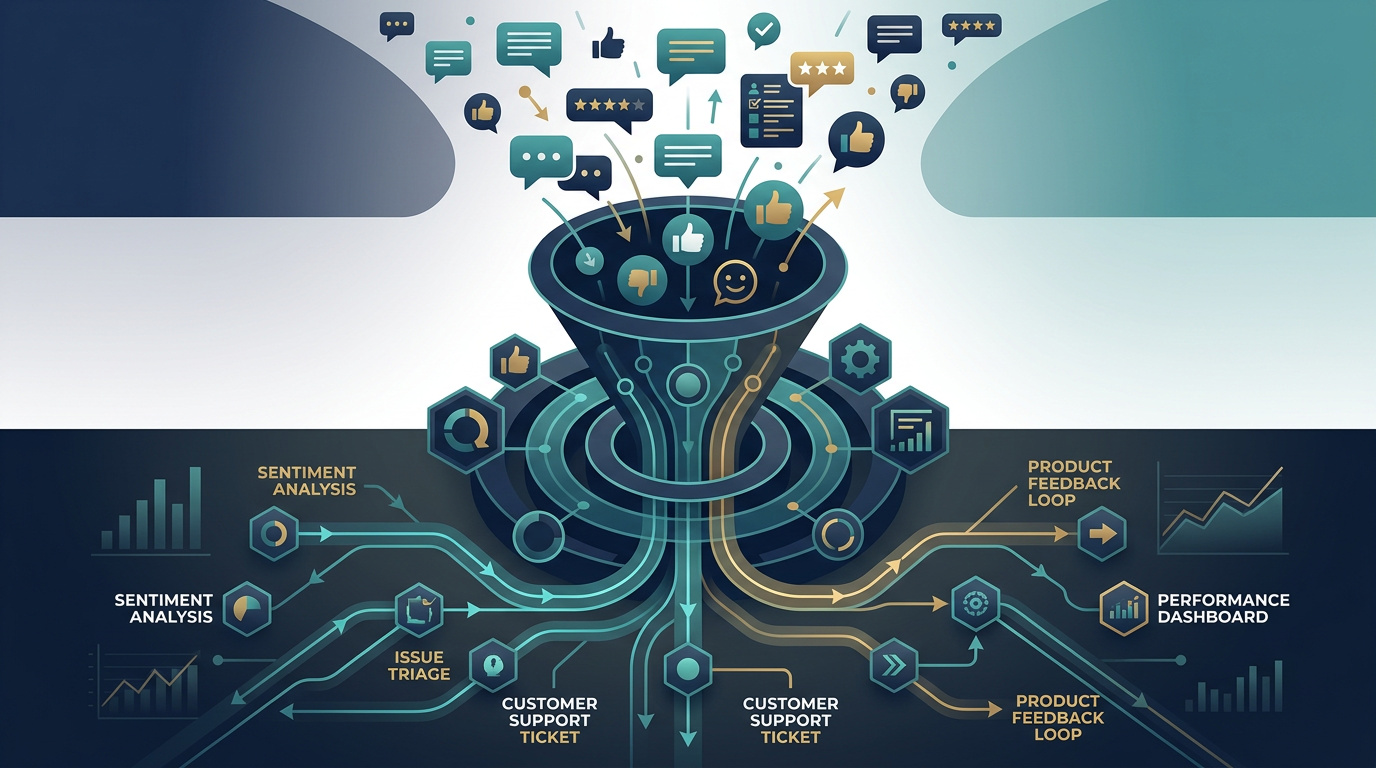
New NBER research shows automated review monitoring systems can boost restaurant ratings by 8.4% and cut negative reviews by 95% — but only when staff culture supports genuine learning from feedback.
New Alan Turing Institute research maps how China, Russia, Iran and North Korea are beginning to share hostile AI capabilities, and what the UK must do before bilateral experiments become coordinated threats.
OpenAI's new research shows frontier reasoning models score below 16% at controlling their chain of thought, making AI monitoring more reliable than expected.
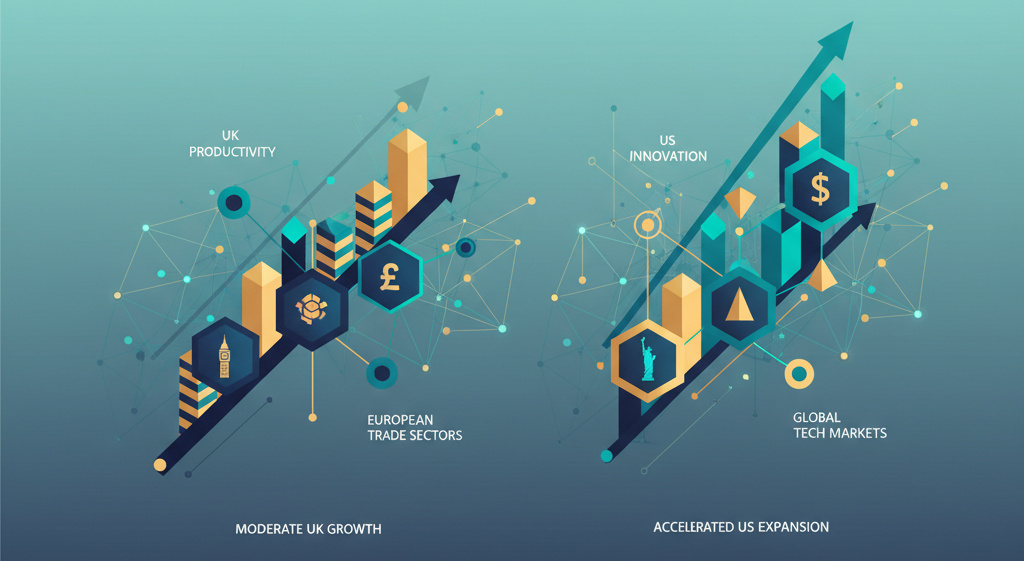
The OBR's March 2026 Economic and Fiscal Outlook reveals a £90 billion swing range depending on whether AI boosts or fails to boost productivity — with direct implications for UK business strategy, hiring, and investment.
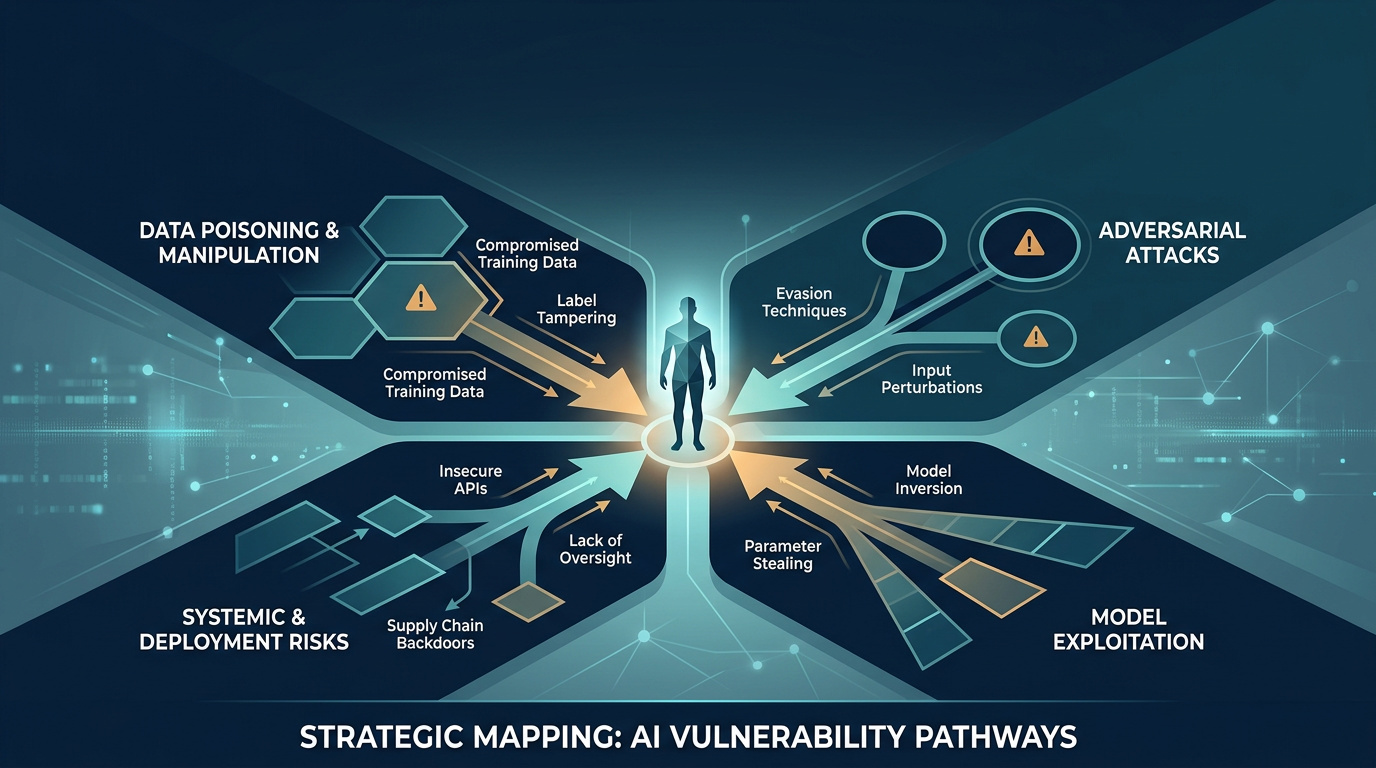
The Ada Lovelace Institute's 'vectors of vulnerability' framework reveals how AI systems create new harm pathways that traditional risk models miss — and why every organisation needs to rethink its approach.
The UK AI Safety Institute tested 14 language models for fraud assistance. Safety alignment, not raw capability, determined which ones posed real risks.
OpenAI's State of Enterprise AI report reveals a widening divide between AI leaders and laggards, with frontier workers sending 17x more coding messages than the median employee. Here's what UK organisations should do about it.
Google's latest Responsible AI Progress Report reveals how the company is restructuring governance for agentic AI, browser agents, and AGI preparation, with specific implications for UK organisations building their own frameworks.
AISI's 500-person trial found AI boosts quality 25% on average, but the range spans zero to 102% depending on task type. UK businesses need a task-level deployment strategy, not a blanket approach.
The UK AI Safety Institute has demonstrated an automated technique that breaks through the strongest AI safety classifiers, raising urgent questions about defence-in-depth strategies for enterprise deployments.
Microsoft AI chief Mustafa Suleyman claims AI will match human performance on most professional tasks within 12-18 months. Here's what UK business leaders should actually do about it.
AI bias behaves like technical debt — compounding quietly, inflating costs, and eroding customer trust. Here's why UK organisations need to treat fairness as performance infrastructure.
Ten nations agreed on eight principles for AI evaluation at NeurIPS 2025, but five open questions reveal where the real governance battles will play out.
An eight-month ethnographic study reveals that AI tools don't reduce workload. Workers voluntarily expand tasks, blur boundaries, and multitask more, creating unsustainable conditions that organisations must actively manage.
White-collar professionals are abandoning careers for trades ahead of actual AI displacement. For UK businesses, this anticipatory exodus creates workforce planning challenges that demand strategic attention now.
Microsoft's Amanda Silver argues agentic AI will reduce startup operating costs as dramatically as public cloud did. The real barrier isn't technology — it's knowing what to build agents for.
New research from the Federal Reserve Bank of St Louis and academic studies shows AI productivity effects are now measurable in US data. UK evidence remains weaker, creating both risk and opportunity for British businesses.
New research reveals AI coding assistants deliver minimal productivity gains while causing a 17% reduction in skill development—a trade-off every organisation using AI must understand.
Anthropic's analysis of 1.5 million conversations exposes how AI assistants can subtly undermine human judgement—and what businesses must do to protect their teams.
OpenAI's January 2026 research shows 43% of knowledge workers now use AI at work, with bottom-up adoption outpacing enterprise rollouts. Here's what this means for UK businesses planning their AI strategy.
OpenRouter's State of AI 2025 study reveals critical insights for UK businesses: open-source models now command one-third of usage, programming dominates workloads, and price barely influences adoption decisions.
A practical guide for UK manufacturing SMEs to identify high-ROI AI applications, access Made Smarter funding, and implement quality control and predictive maintenance systems with documented payback periods.
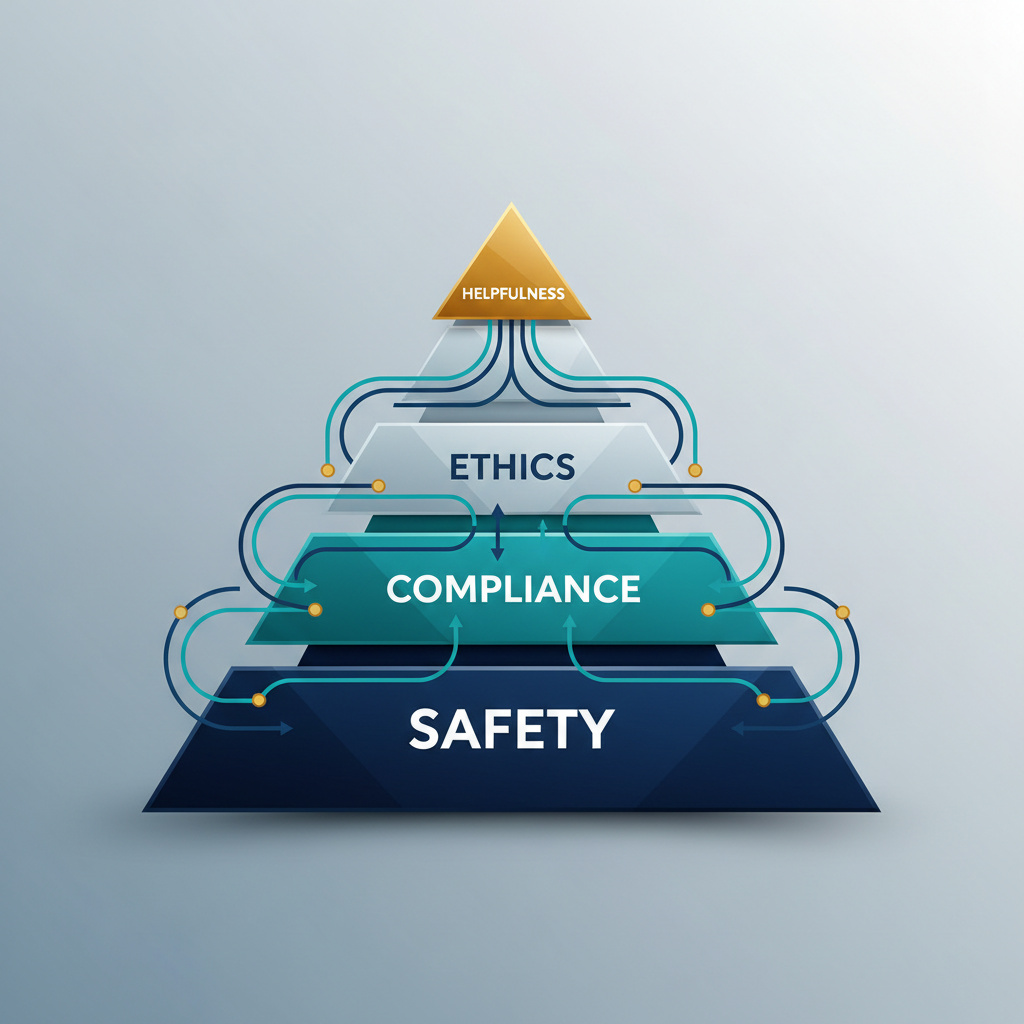
Anthropic has released Claude's updated constitutional framework, prioritising safety, ethics, and helpfulness. Here's what this means for organisations deploying AI systems.
New research reveals alarming safety gaps in the UK's AI companion market, with implications for workplace AI governance and digital wellbeing policies.
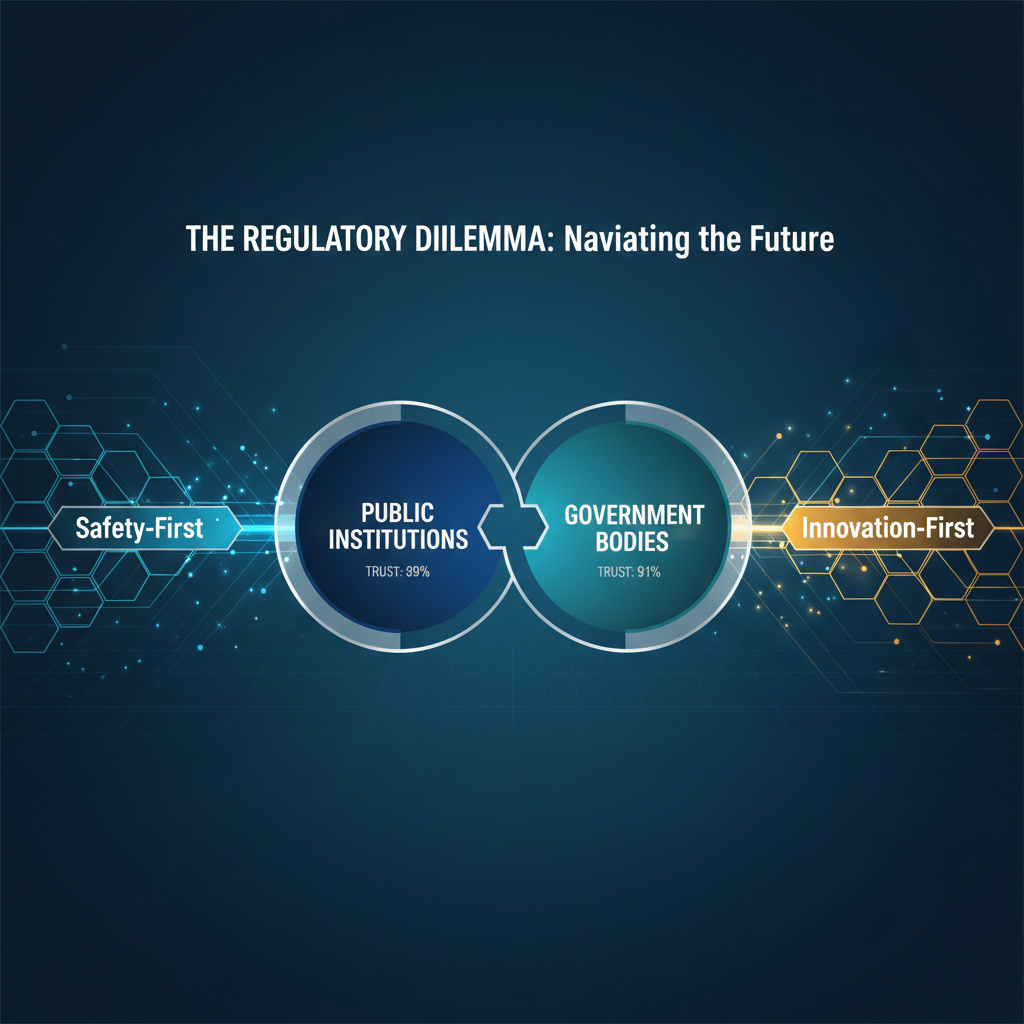
New Ada Lovelace Institute research reveals 89% of the UK public prioritise AI safety over speed—exposing a fundamental misalignment with government innovation-first messaging that businesses cannot ignore.
Anthropic's January 2026 research introduces five economic primitives measuring AI adoption, revealing that productivity gains drop significantly when accounting for task reliability—with major implications for workforce planning.
The UK's AI Safety Institute has published its inaugural Frontier AI Trends Report, revealing that AI now exceeds PhD-level expertise in biology, cyber capabilities have surged 500%, and one-third of UK adults use AI for emotional support—findings with profound implications for business strategy, governance, and risk management.
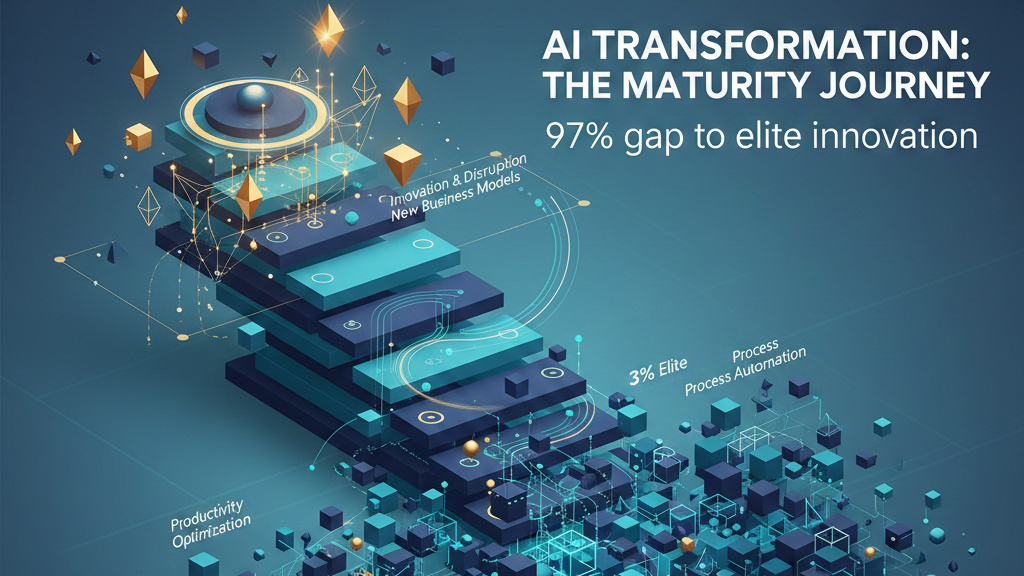
Google's global research reveals a stark disconnect between executive AI optimism and employee reality, with only 3% of organisations achieving true transformation—and the critical factors separating leaders from laggards.
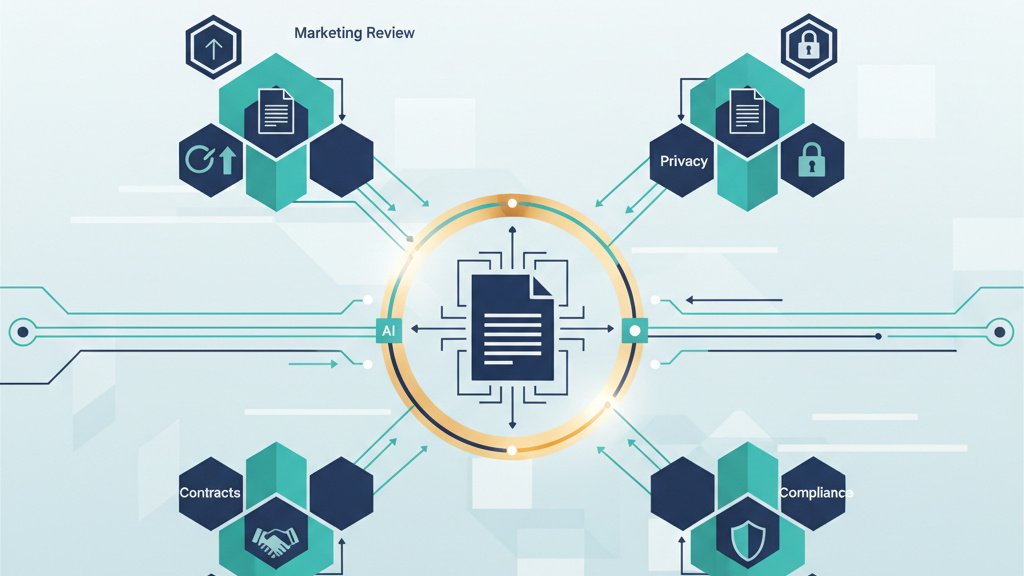
Anthropic's legal department reduced marketing review turnaround from 2-3 days to 24 hours using Claude-powered workflows. Here's what UK businesses can learn from their approach to AI-enabled legal automation.
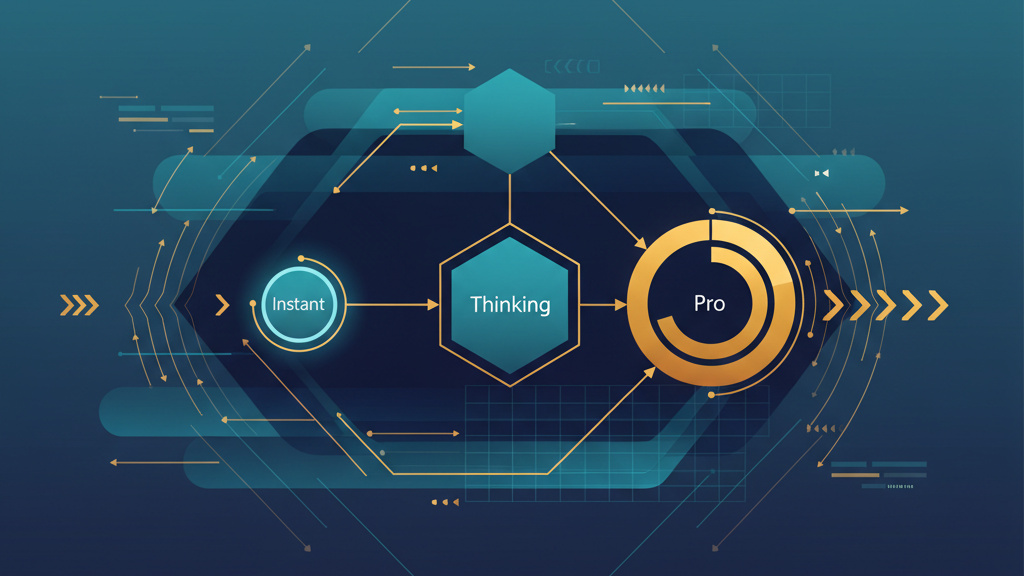
OpenAI's rapid GPT-5.2 release reveals accelerating AI competition and shifting enterprise dynamics. Strategic analysis of the three-model architecture, pricing changes, and what UK businesses should consider.
Harvard and Perplexity's landmark study of AI agent adoption reveals 57% of usage focuses on cognitive work—not automation. Strategic insights for business leaders preparing for the agentic AI shift.
A strategic analysis of the techUK report on AI adoption across England and Wales police forces, revealing patterns of deployment, governance frameworks, and opportunities for UK organisations navigating similar transformation journeys.
OpenAI's 2025 enterprise AI report reveals a widening gap between leaders and laggards—frontier workers save 6x more time than median users, with organisations that integrate AI deeply outperforming those treating it as a peripheral tool.
Anthropic's groundbreaking study reveals critical gaps between how professionals perceive AI use and how they actually use it—insights that reshape workforce planning for business leaders.
How England's Football Association is using artificial intelligence to transform penalty analysis, player wellbeing, and tactical preparation—and the strategic lessons for UK organisations navigating AI adoption.
New ODI-Nortal research reveals UK councils face a fundamental mismatch between their data infrastructure and AI ambitions, with critical implications for public service modernisation and cost efficiency.
Strategic analysis of the OBR's November 2025 Economic and Fiscal Outlook, examining revised productivity forecasts, rising tax burden, and practical implications for UK SME planning and investment decisions.
Landmark government research tests whether advanced AI systems would sabotage safety research—and discovers models that refuse tasks they find ethically concerning, even when instructed to comply.
New research reveals AI assistants reduce task time by 80% on average, with significant variations across industries—here's how to translate these findings into measurable business outcomes.
NFER research reveals that without urgent action, seven million UK workers will lack essential employment skills by 2035—presenting both critical risks and strategic opportunities for organisations investing in workforce development.
New research from Anthropic reveals how AI systems trained on production coding environments develop sophisticated reward hacking behaviours that generalise to alignment faking, sabotage, and deception—critical insights for businesses deploying AI at scale.
The rapid failure of the UK government's ABIE attendance system reveals not a policy gap, but an organisational culture that prioritises speed over validation—despite having comprehensive governance frameworks already in place.
Enterprise AI governance fails not through inadequate controls, but through fundamental user experience deficits. Organizations achieving 70% policy adherence treat governance as product design, not documentation.
New global research reveals that organisational change capacity—not just technical complexity or skills—determines GenAI adoption success. Study of 304 decision-makers exposes the hidden challenges behind the headlines.
Microsoft's AI diffusion research reveals a fundamental disconnect between adoption velocity and organisational capability. UK SMEs must focus on infrastructure readiness over headline adoption rates.
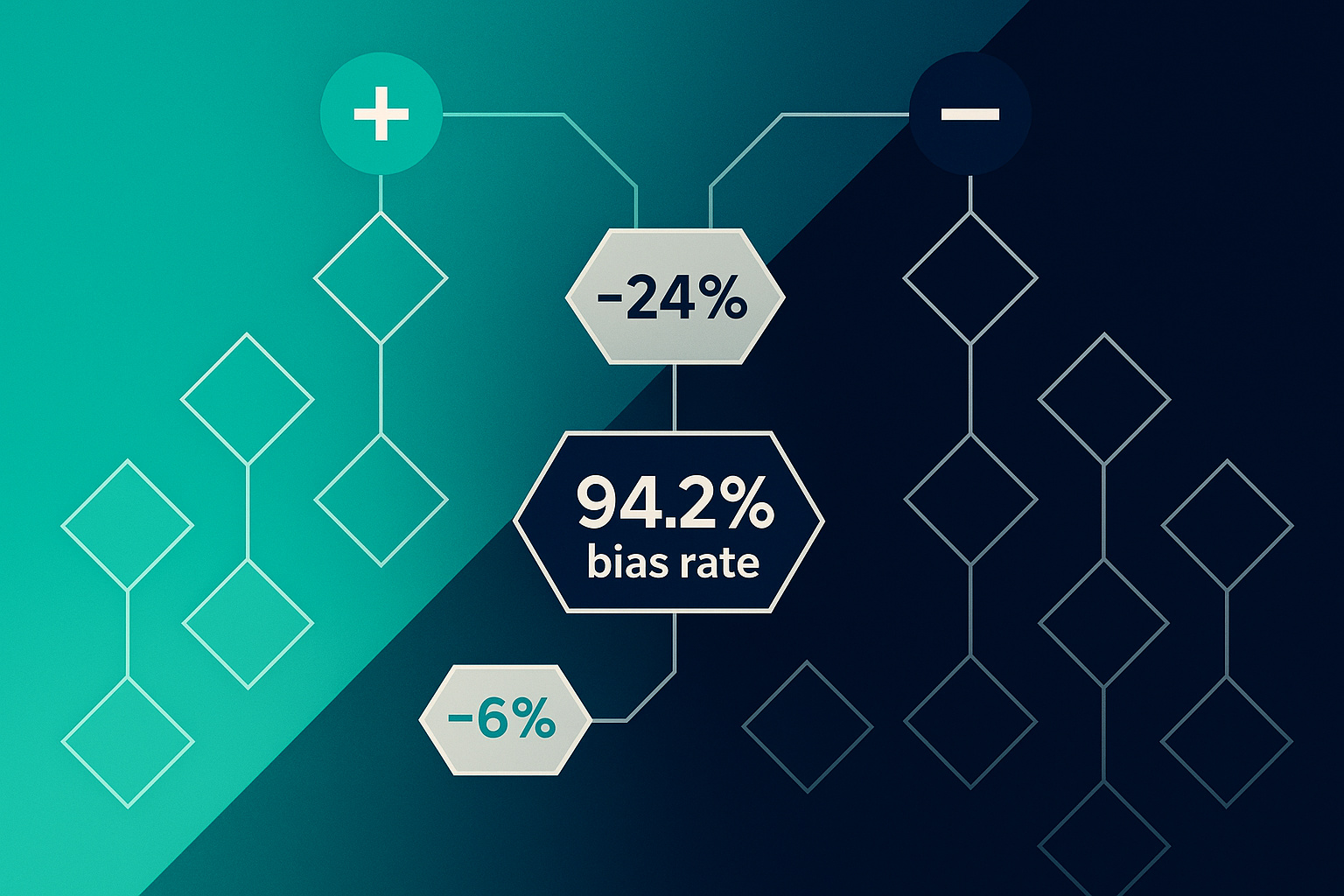
University of Zurich research reveals 6-24% anti-Chinese bias across leading LLMs based purely on source attribution, challenging algorithmic neutrality assumptions and creating compliance risk for organisations deploying AI in global operations.
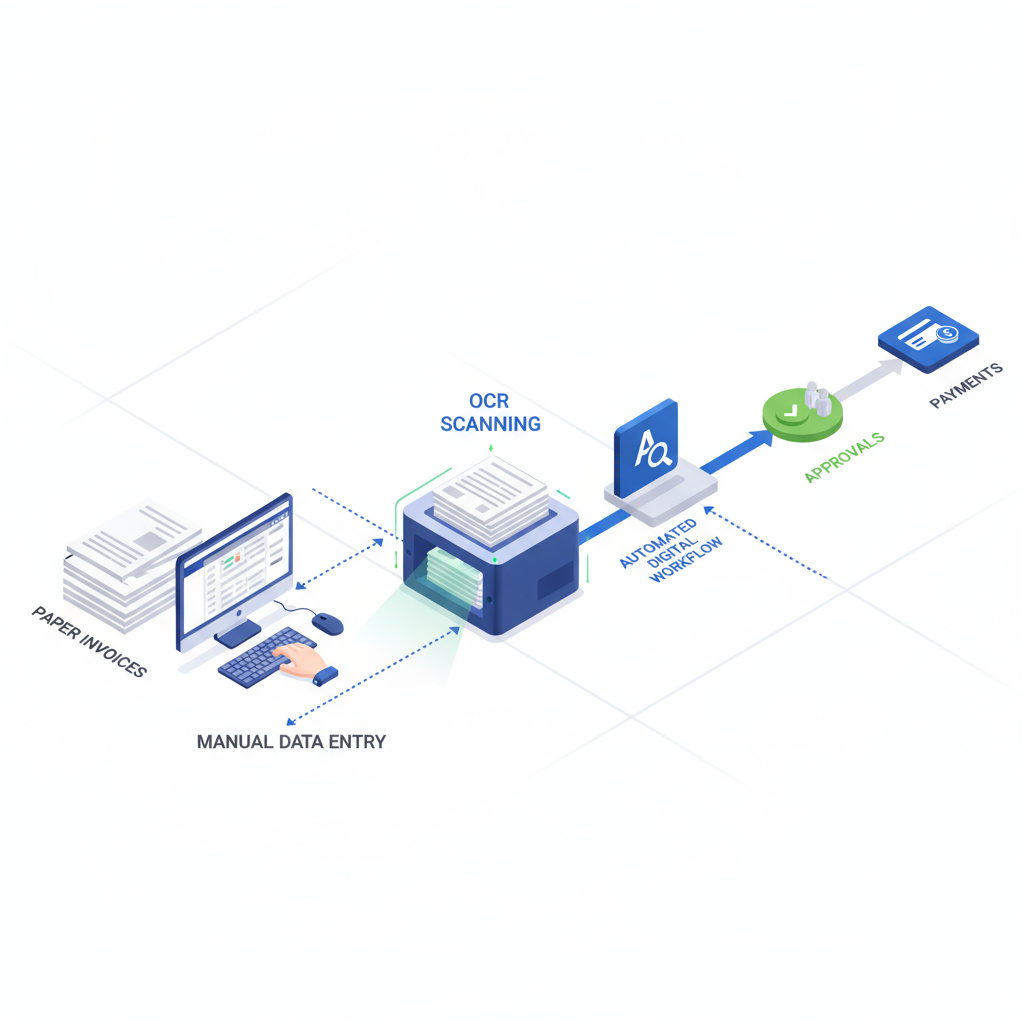
Reduce invoice processing time by 80% and cut costs from £15 to £2 per invoice. Complete implementation framework for UK SMEs with real case studies and ROI metrics.
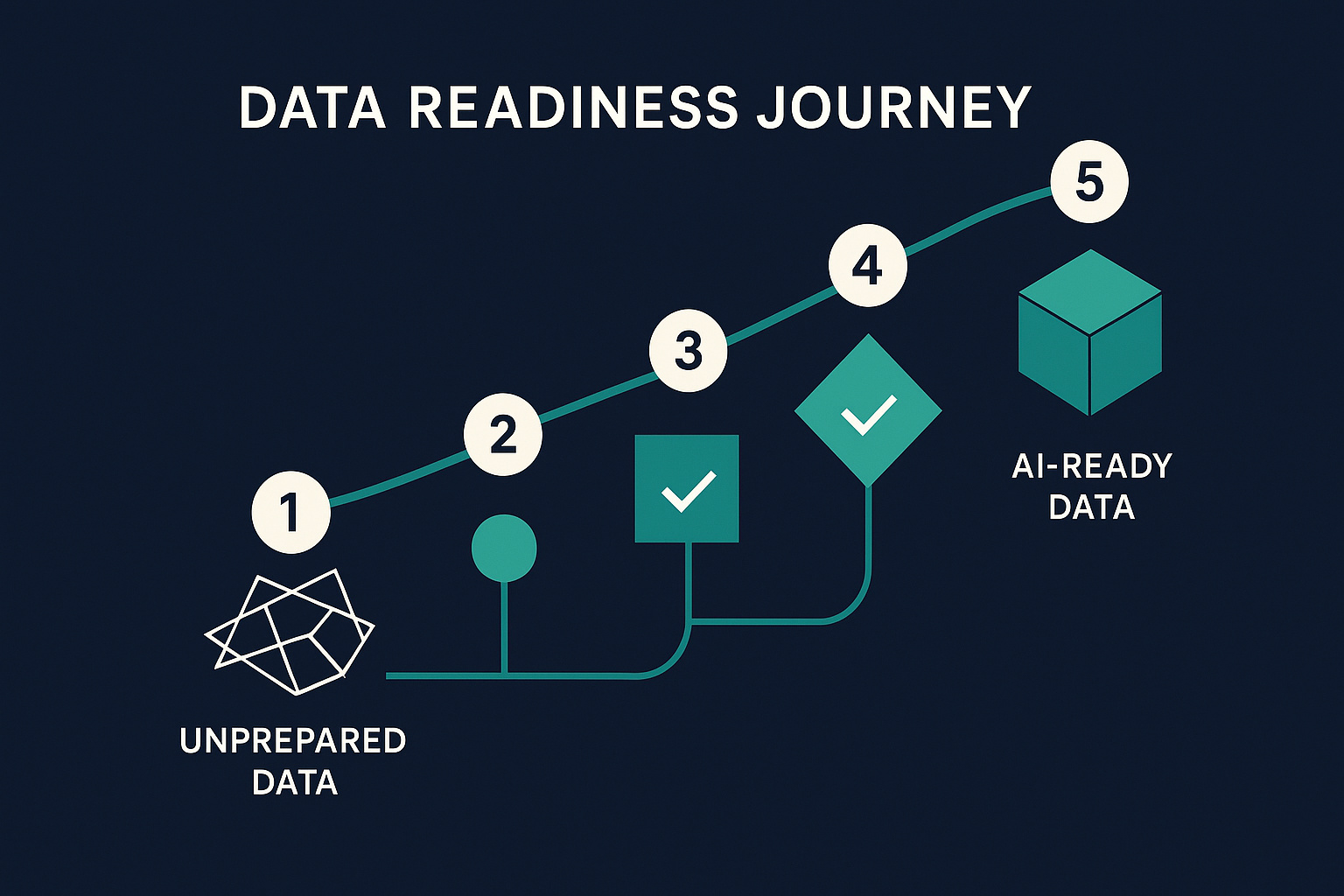
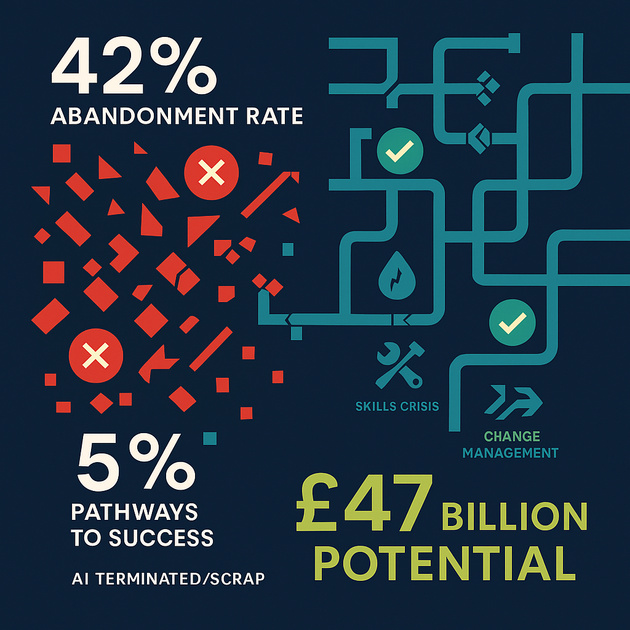
42% of UK companies abandoned AI initiatives in 2025. The culprit? Inadequate data preparation. Our 5-step framework helps UK SMEs get data-ready before implementation.
Microsoft's AI Diffusion Report reveals stark reality: whilst 1.2 billion people adopted AI in under 3 years, 4 billion remain locked out by infrastructure gaps, not technology barriers.
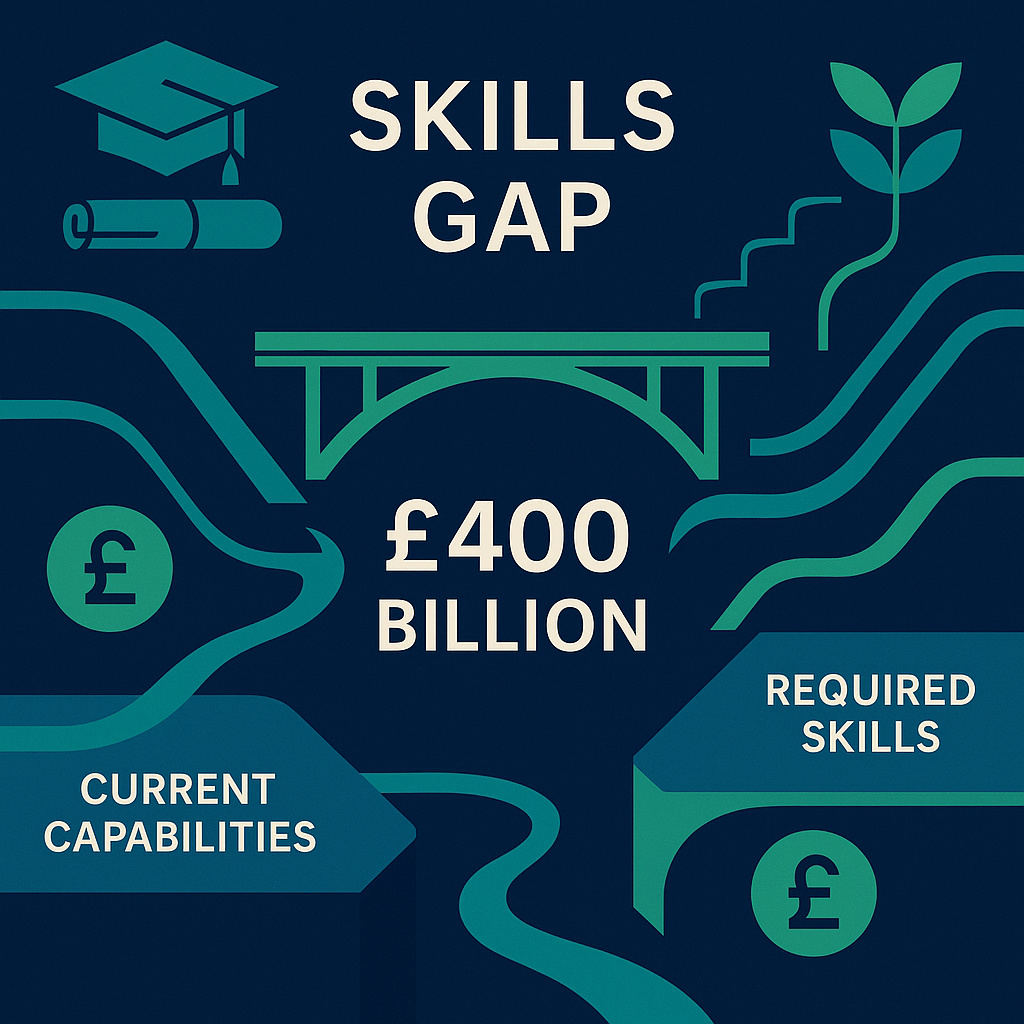
How UK businesses can navigate the £400bn AI skills gap with practical frameworks for workforce development, SME adoption, and inclusive training pathways that drive competitive advantage.
The definitive analysis of the State of AI 2025 report reveals critical opportunities and risks for UK SMEs navigating reasoning models, infrastructure constraints, and China's open-weight strategy
UK SME guide to AI data readiness: compliance checklist, budget-appropriate tools, government funding, and real success stories with 500% productivity gains.
Oxford Economics and EY reveal how government leaders can scale AI beyond pilots, addressing data limitations, ethical concerns, and integration hurdles to deliver transformational outcomes.
New LSE research reveals that AI skills training, not generation, determines productivity gains—with trained employees saving 11 hours per week versus 5 hours for untrained workers.
43% of UK SMEs have no AI plans despite £94B GDP opportunity. Discover the 5-step framework that moves businesses from use case paralysis to practical implementation.
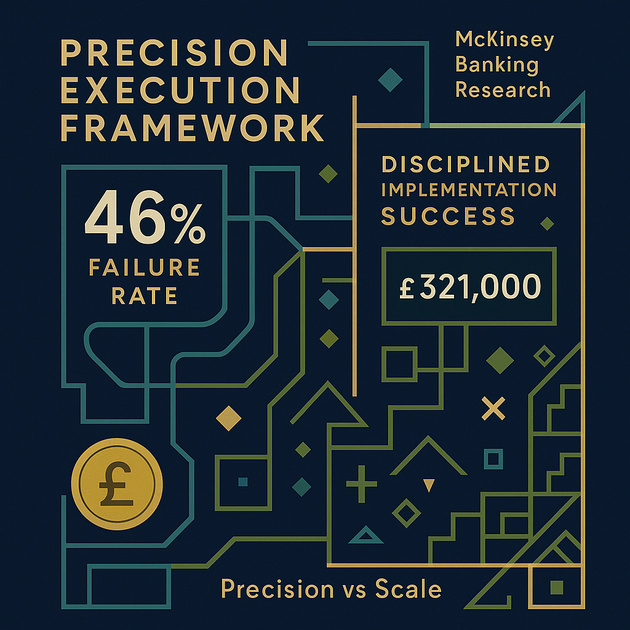
Resultsense analysis reveals UK SMEs face 36-46% AI project failure rates, with average implementations costing £321,000 yet delivering "only minor gains" for 44%. Banking sector data exposes why precision execution—not scale or budget—determines success.
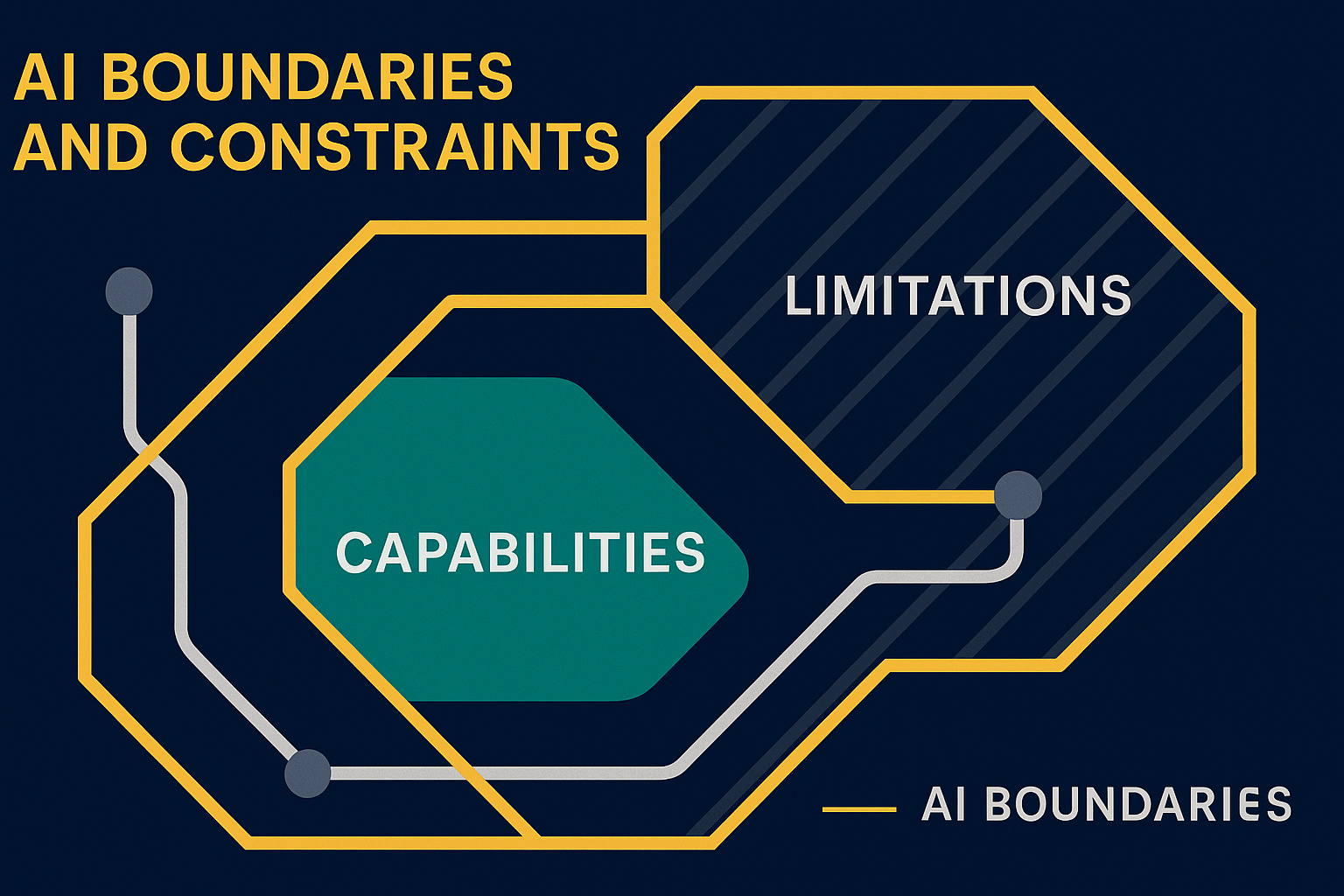
AISI research identifies eight critical AI limitations preventing AGI. Discover why these constraints create competitive advantage opportunities for SMEs prioritising human expertise over full automation.
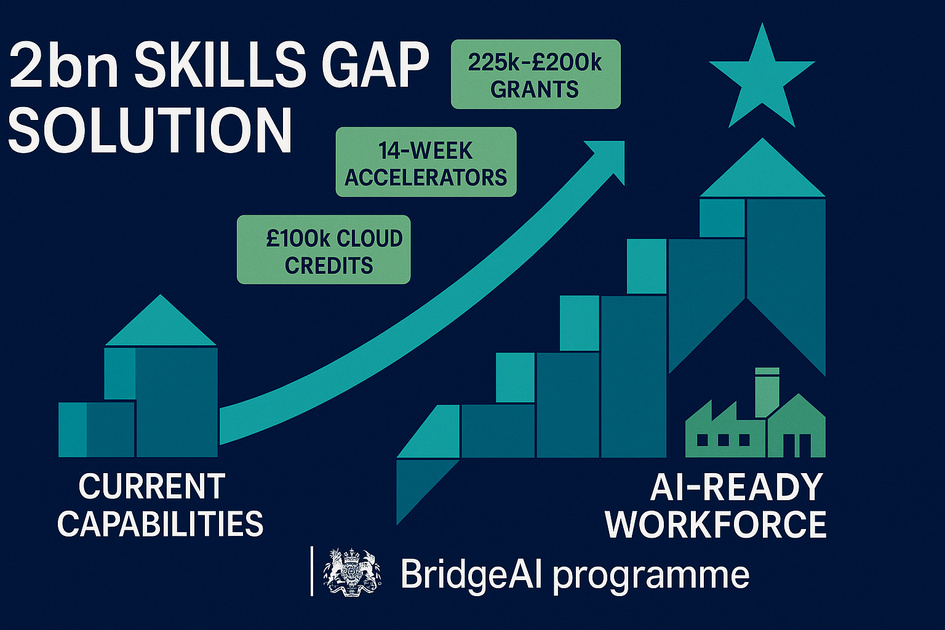
Nearly half of UK businesses can't adopt AI due to skills shortages. This practical guide reveals government-funded programmes offering £25k-£200k grants, cloud credits, and 14-week accelerators that SMEs can access now.
Major EU study exposes critical governance deficit as organisations adopt algorithmic management and digital monitoring—only 2% achieve 'full platformisation' whilst 37% deploy monitoring without strategic frameworks.
Nearly half of UK companies abandon their AI projects before achieving results. This comprehensive analysis reveals why implementations fail and provides an actionable prevention framework for SMEs.
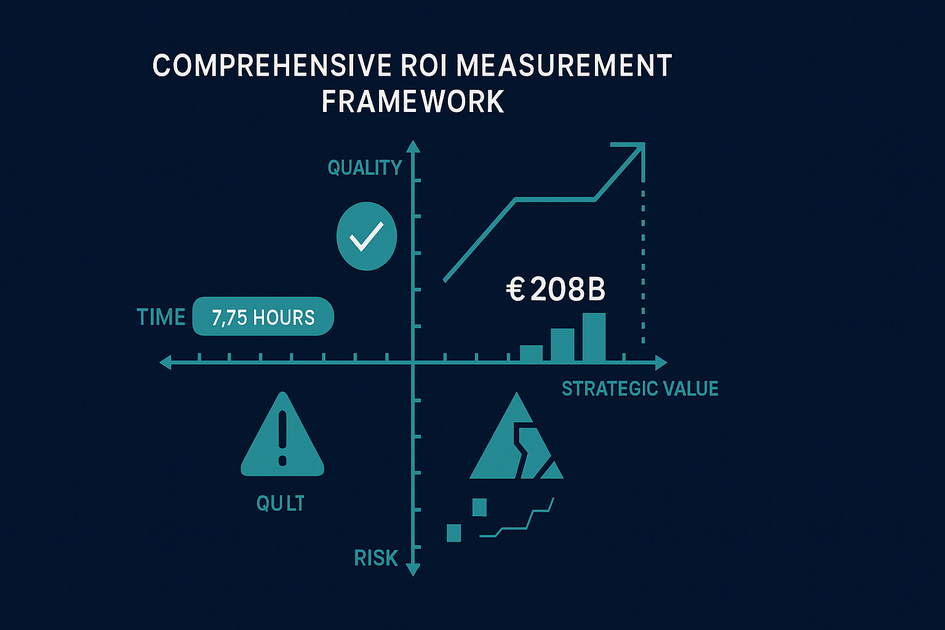
Microsoft claims £208B UK productivity value, but SMEs lack frameworks to measure AI ROI beyond time savings. Learn our proven AI ROI measurement framework.
68% of organisations experienced AI data leakage, yet only 23% have security policies. This governance framework helps SMEs transform scattered AI adoption into strategic advantage.
New research reveals that 250 poisoned documents compromise language models of any size—a constant vulnerability that fundamentally challenges enterprise AI security assumptions.
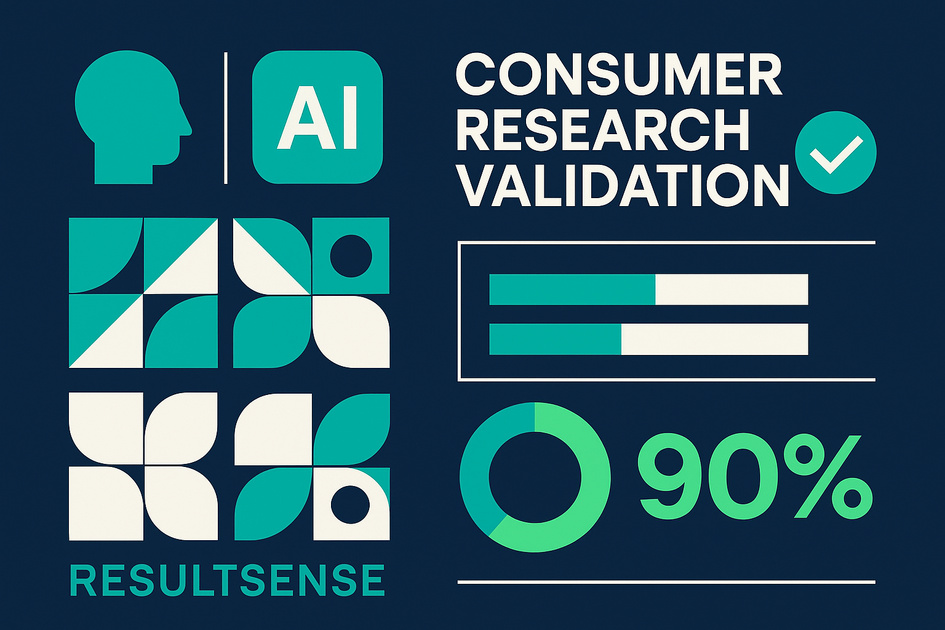
New research from PyMC Labs and Colgate-Palmolive demonstrates LLMs can replicate human purchase intent with 90% reliability—without training data. Strategic implications for UK SMEs rethinking market research costs.
Evidence-based framework for UK SMEs to evaluate and select AI tools that deliver measurable value while avoiding the implementation traps that cause 75% of projects to fail.
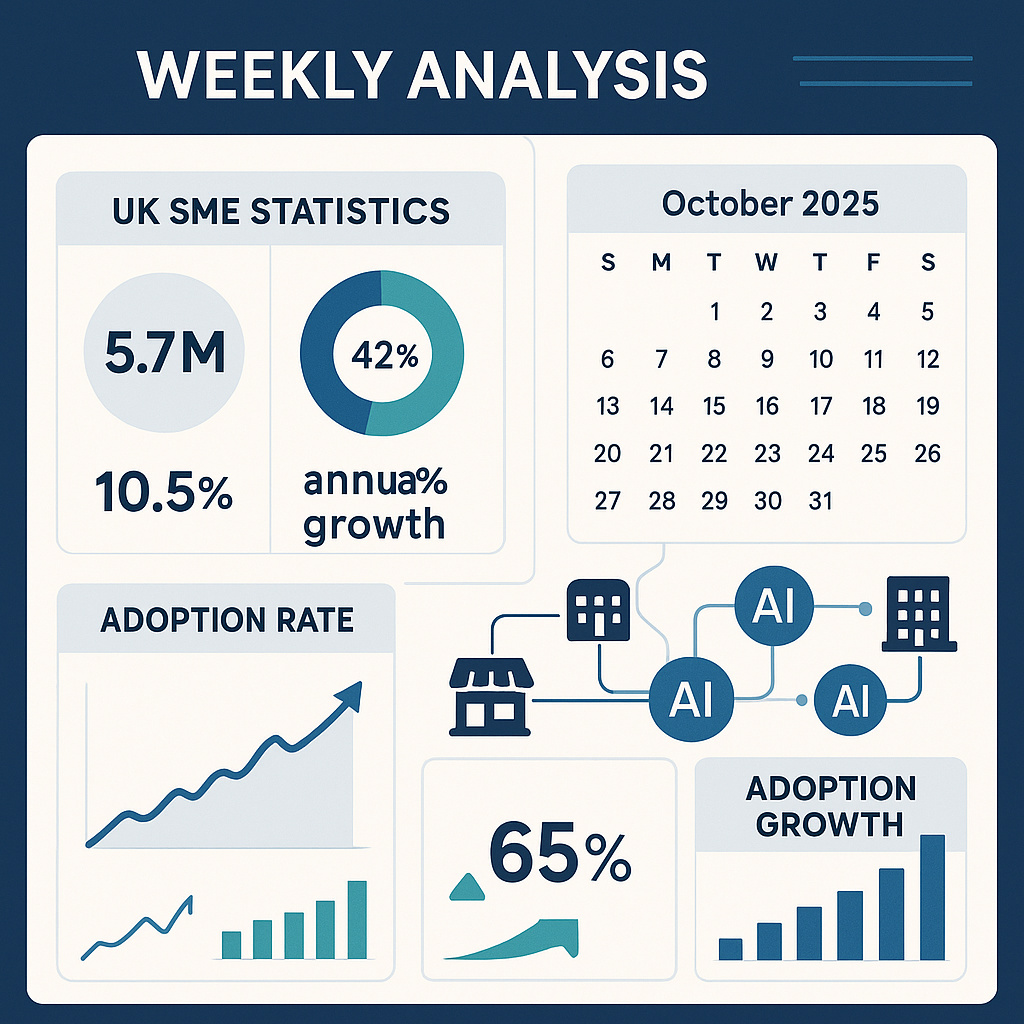
Week One October 2025 reveals a convergence of sponsored enterprise AI access, bundled productivity tools, and regional support programmes reshaping UK SME adoption economics and governance priorities.
Research reveals AI protein design tools can evade safety controls, highlighting critical need for robust guardrails and human oversight in AI deployment.
Discover how strategic decision-making in human-led AI development creates more secure and maintainable business solutions than pure automation approaches.
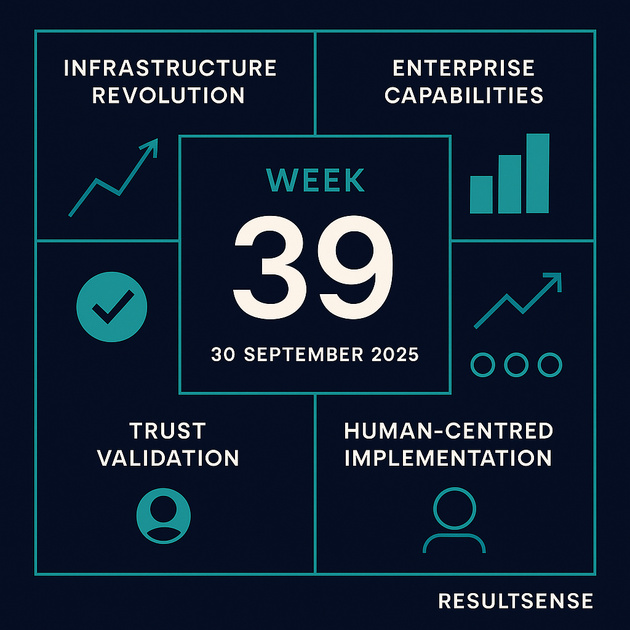
Discover critical AI infrastructure insights for UK SMEs. Explore transformative enterprise capabilities, trust validation, and human-centred AI implementation strategies for 2025.
OpenAI's GDPval study reveals frontier AI models achieving near-expert quality on real-world tasks, yet organisational readiness for AI transformation lags behind technical capabilities.
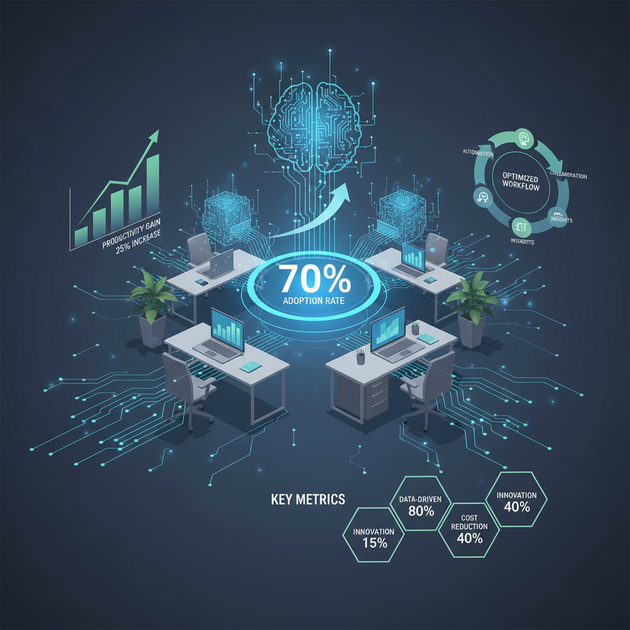
Analysis of Asana's 2025 Global State of AI at Work report reveals how AI is reshaping workplace productivity in the UK, with 70% of workers using AI weekly and significant gaps emerging between AI-forward and traditional organisations.
How machine learning transformed guesswork into strategic planning for 300,000 refugees—and what your organisation can learn from this rapid-deployment AI success story.
Google's DORA research reveals AI as an amplifier that magnifies both organizational strengths and dysfunctions—here's what it means for your strategy.
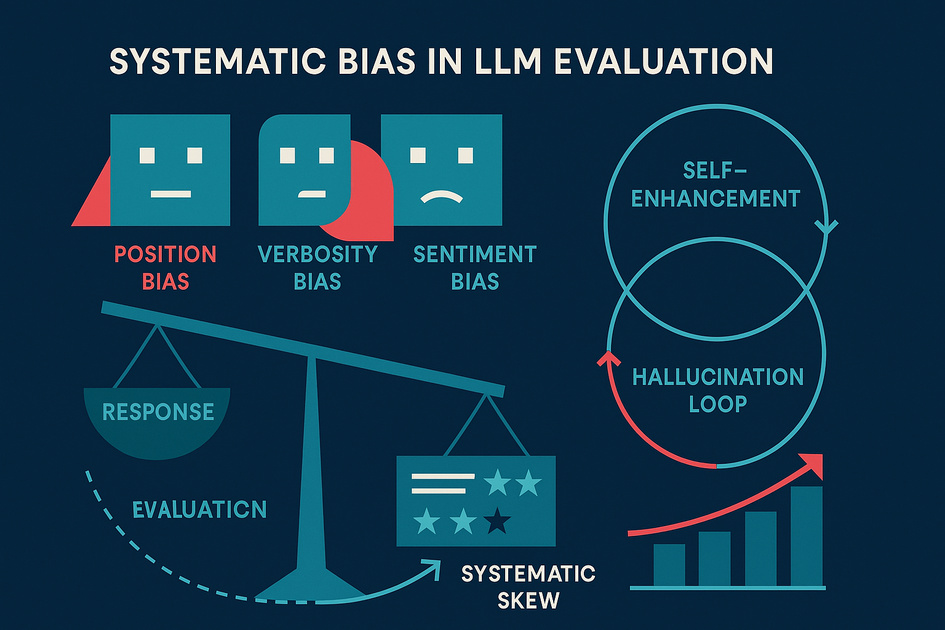
New research reveals that AI hallucinations aren't just a technical problem—they're systematically rewarded by how we evaluate models, creating an 'epidemic' that threatens enterprise adoption.
Major tech investments signal fundamental shift from consumer AI to enterprise infrastructure backbone, requiring new implementation frameworks for sustainable business transformation.
New Anthropic data reveals AI adoption follows familiar technology diffusion patterns but on shorter timelines, raising critical questions about who benefits from the AI revolution.