UK GDP beats August forecast as programming tops three-month growth
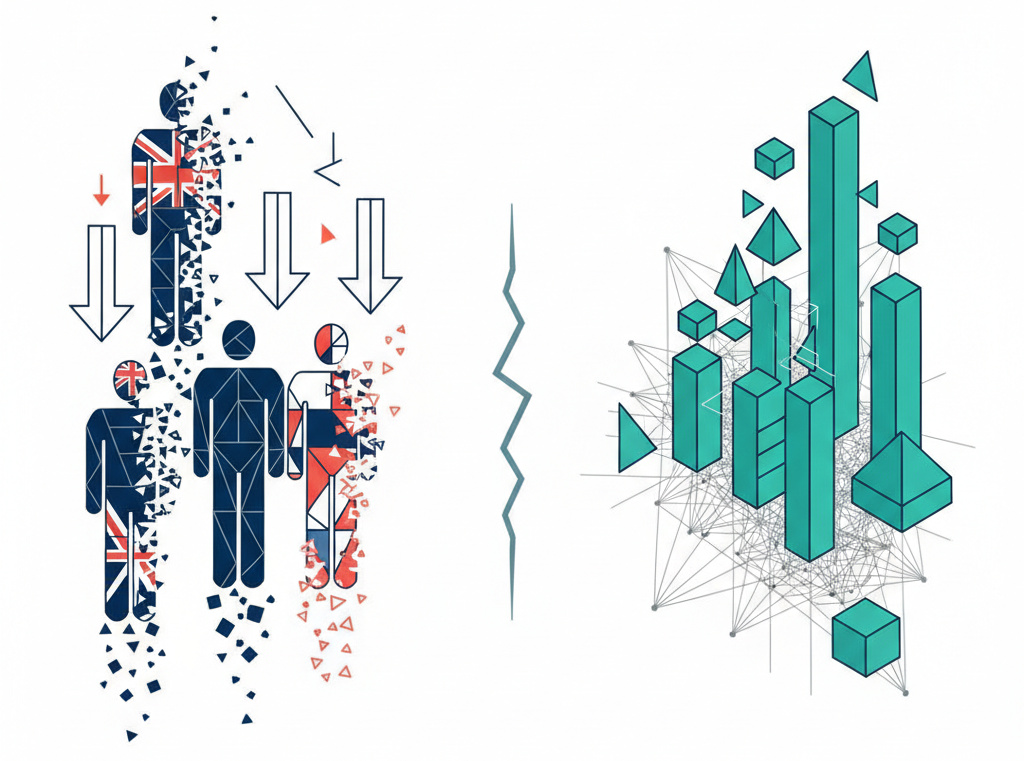
ONS data shows UK GDP grew 0.1% in August against forecasts of a fall, with computer programming the largest contributor to growth for a sixth month running.
21 articles tagged UK economy
ONS data shows UK GDP grew 0.1% in August against forecasts of a fall, with computer programming the largest contributor to growth for a sixth month running.
Computer programming output rose 3.5% and added 0.12 points to GDP. The statistics office links the jump to AI and cloud firms but says it cannot measure the effect.
A 30-country analysis names Britain as the major economy most exposed to AI, citing a large share of affected roles and heavy reliance on services exports.
LSE economists find UK productivity growth of 1.6% since late 2024, but the tax records behind it show employment falling where official figures show a rise.
Information and communications delivered almost half of Britain's 0.4% second-quarter growth, with hardware spending pushing capital investment to £22.1bn.
Staff research using ONS industry data finds AI-producing sectors driving productivity gains, echoing the first phase of the computing revolution.
A Publicis Media UK study says accelerating AI skills could add £69.1bn to the UK ad and marketing sector by 2030, with the current skills gap worth 150,000 roles.
The Bank of England is preparing to scenario-plan the economic and financial impact of a rapid AI shock, with potential inclusion in future banking stress tests.
New UK businesses generated an average of 2.7 jobs each last year — one fewer than when records began — as founders turn to AI and freelancers.
Morgan Stanley research shows UK companies report 8% net job losses from AI, higher than US, Japan, Germany and Australia despite similar productivity gains.
The central bank's Financial Stability Report highlights stretched AI valuations alongside private credit and gilt repo trading as elevated risk factors.
New NFER research predicts significant job losses in trades, administration and machine operations, while professional roles may grow.
UK accountancy firm cuts report completion from two weeks to two hours using AI, raising hopes Britain's services-heavy economy can escape productivity stagnation.