More than 100 UK data centres plan to burn gas to power AI workloads
TL;DR:
- More than 100 new UK data centres plan to burn gas to generate their own electricity, with some doing so permanently, after years-long waits to connect to the National Grid.
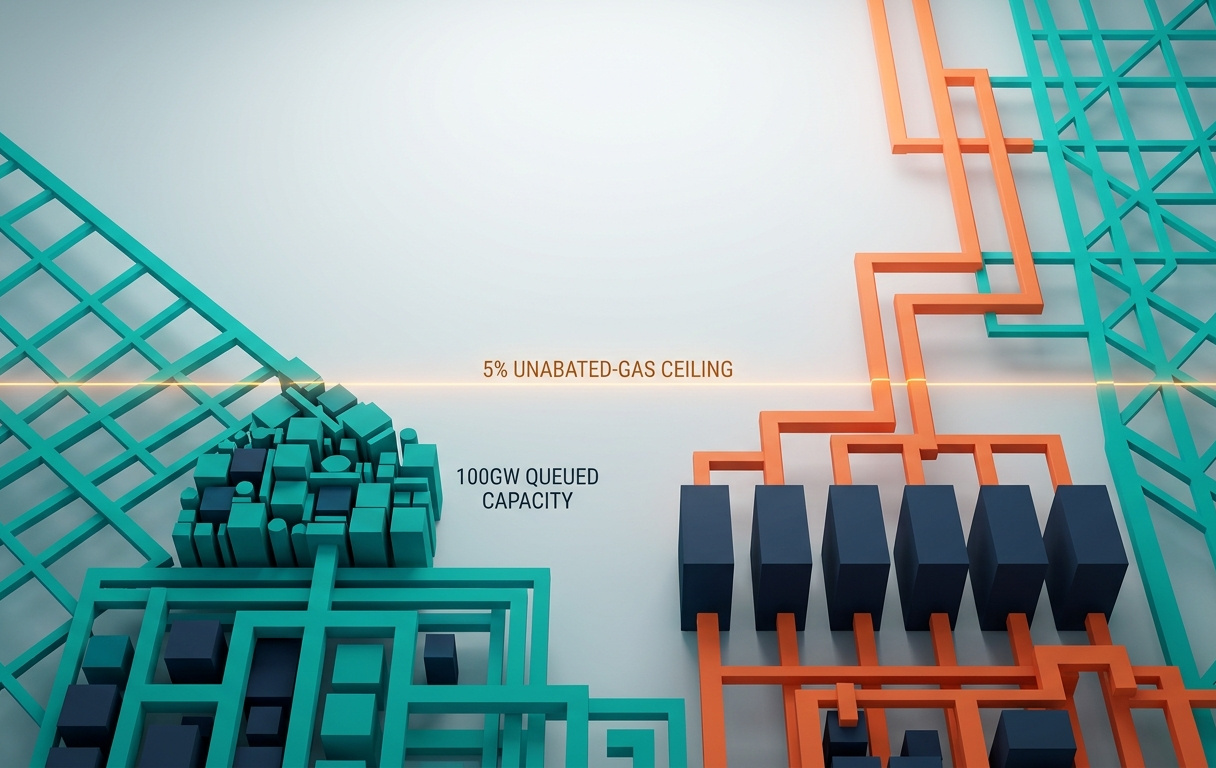
- Ofgem’s director of cyber regulation and AI Stuart Okin confirmed there are 100GW of data-centre projects in the queue — far more than can be accommodated — forcing developers toward gas alternatives.
- The UK National Energy System Operator says the gas buildout could complicate the government’s Clean Power 2030 target, which envisaged less than 5% of unabated gas in the electricity system.
A marked shift in UK energy policy is happening by default rather than design. The Guardian reports that more than 100 new UK data centre projects now plan to burn gas to generate their own electricity, with some doing so permanently — a direct consequence of the years-long wait facing developers seeking to connect to the National Grid. Stuart Okin, Ofgem’s director of cyber regulation and AI, confirmed the scale of the problem at the All-Energy conference in Glasgow: “There’s 100GW of datacentre projects in the queue. Clearly that’s not all going to be able to connect [to the grid]. If a project isn’t going to get a connection, it is going to have to come up with an alternative method.”
The supply-side data is striking
Silvia Simon, head of research at Future Energy Networks (which represents UK gas suppliers), said the group has received “more than 100” requests for gas connections from data-centre operators in the past two years. The total demand from those requests amounts to more than 15 terawatt-hours per year — enough to power London for roughly four and a half months. “Gas networks are seeing a lot of interest from datacentre developers looking to secure a gas connection,” Simon said. “Not just for resilience, but for primary supply. So this is already an indication that they’re really struggling to get through to the electricity networks.”
The qualitative shift is the more important point. An industry consultant told the Guardian that “using gas networks was previously avoided due to carbon, permitting, and land-take impacts, and has typically only been considered as a temporary fix” — but developers are now requesting “over 100MW of gas power on a permanent basis.” That is the line that turns a backstop into a structural commitment.
A direct challenge to Clean Power 2030
Julian Leslie, director of strategic planning at the UK’s National Energy System Operator (Neso), put the policy question plainly: “The target was to get less than 5% of unabated gas supplying electricity in the system. But obviously if we’ve got datacentres not connected to electricity but powered by unabated gas then it does raise an interesting question about what that means for the Clean Power 2030 target.” The same scenario has played out in the US — 11 US data centres serving Meta, OpenAI, Microsoft and xAI are now reported to emit more carbon than the country of Morocco, with off-grid gas generators a substantial driver.
Ofgem’s Eleanor Warburton signalled reform is in flight: connections are being delivered, she said, “but the system must work better for projects that are viable and ready to proceed. We are in the process of reforming demand connections so that viable projects can connect faster while Government is looking at the question of whether changes are needed regarding the prioritisation of strategic connections, which could include some AI projects.”
Looking forward
The grid bottleneck reframes this week’s separate CNBC reporting that UK data-centre consumption is already at 5.8% of national electricity and approaching the 6% pushback threshold. The combination — high demand, high electricity prices, queue-clogged grid, and developers now permanently routing around to gas — describes an energy environment that is fundamentally inhospitable to UK AI infrastructure ambitions. Whether the Sovereign AI Unit and the Regulating for Growth Bill can be paired with grid-connection reform aggressive enough to keep AI projects on the National Grid rather than on gas is the structural test of the next eighteen months.