Kendall: failing to invest in AI would leave UK ‘at its mercy and whim’
TL;DR:
- Liz Kendall, secretary of state for science, innovation and technology, told a Royal United Services Institute (RUSI) audience that failing to invest in AI would be a “betrayal” of the UK and would leave the country “at its mercy and whim”.
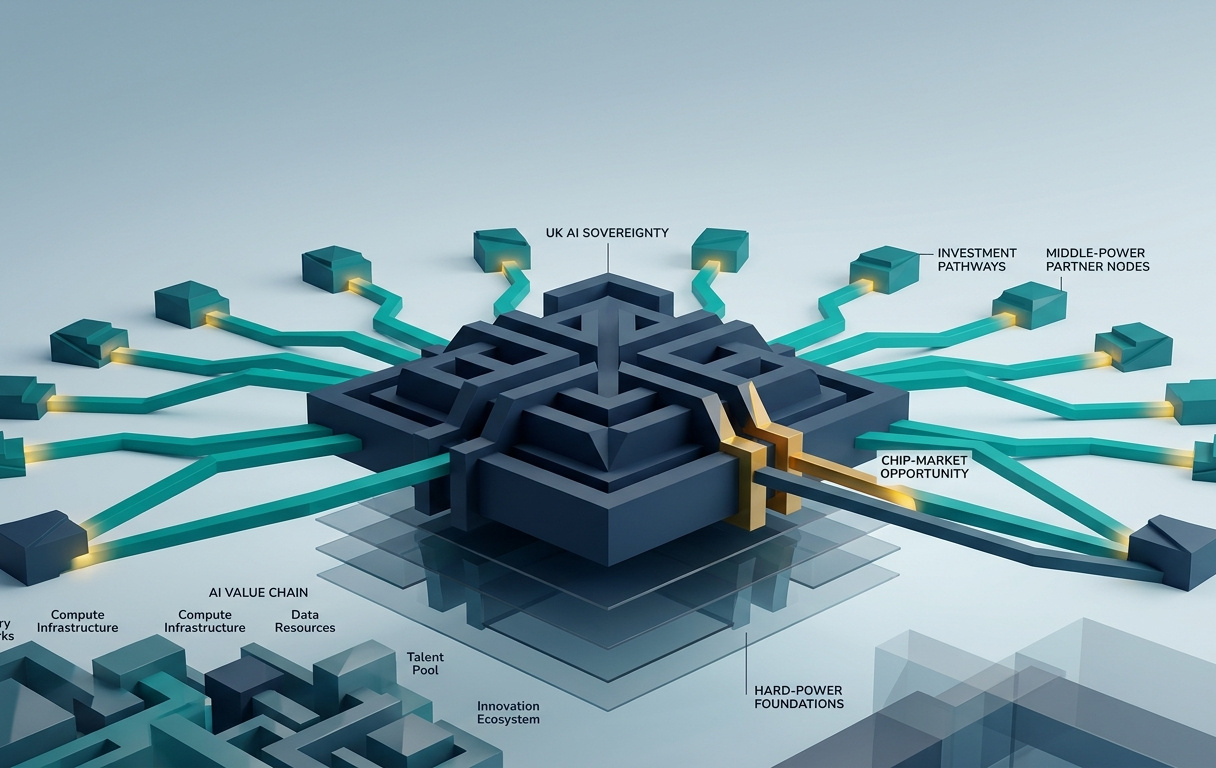
- She set out plans for joint AI investment with “middle power nations”, a Sovereign AI venture fund, and an AI hardware plan to be launched in June targeting a $50 billion chip-market opportunity.
- Resultsense view: the speech reframes UK AI policy from skills and adoption — the Mansion House and AI Action Plan tone — to economic sovereignty and hard power. That is a meaningful rhetorical shift the same week the EU dilutes its AI Act and the US Commerce Department tightens its frontier evaluation regime.
The cabinet minister described AI as “the defining currency of our age” and “the engine of economic power and hard power”, arguing the UK must “shape this technology, not just be shaped by it”. The framing positions AI investment alongside defence and energy as a strategic sovereignty question rather than primarily an industrial-policy one.
What’s in the package
Kendall confirmed the recently announced Sovereign AI venture fund as a backing mechanism for domestic AI companies. She said an AI hardware plan would be launched in June, setting out an ambition for the UK to break into the AI chips market — an opportunity she described as worth $50 billion in revenue and capable of creating thousands of jobs. The chips dimension is notable; UK chip designer Arm — which forecast first-quarter revenue above Wall Street expectations on 6 May, citing AI data-centre demand — is already a domestically-listed beneficiary of that wave.
She also flagged a planned multilateral track: working with “other middle power nations” on joint investment in the AI value chain and on resilience in AI security. The speech did not name those partners, but the RUSI venue is suggestive.
The political backdrop
Kendall acknowledged that “geopolitical rivalry is driving the tech boom” but also said social media, tech and AI are “driving political discord” and shaping “an increasingly divided and volatile world”. She positioned UK AI investment as a corrective: a chance for a “technological British renaissance” yielding both economic and national security benefits.
Looking forward
The speech’s substance will be tested by the AI hardware plan in June and the eventual disclosure of the partner countries in the middle-powers initiative. The harder political test is fiscal — translating the rhetoric into capital that meets the scale implied by the language, against a Treasury that has already had a contentious year balancing AI investment against retraining and welfare commitments. Lord O’Donnell’s argument this week, that AI “winners” must compensate “losers” through retraining, will sit uncomfortably alongside a sovereignty narrative if the two are seen to compete for the same revenue.